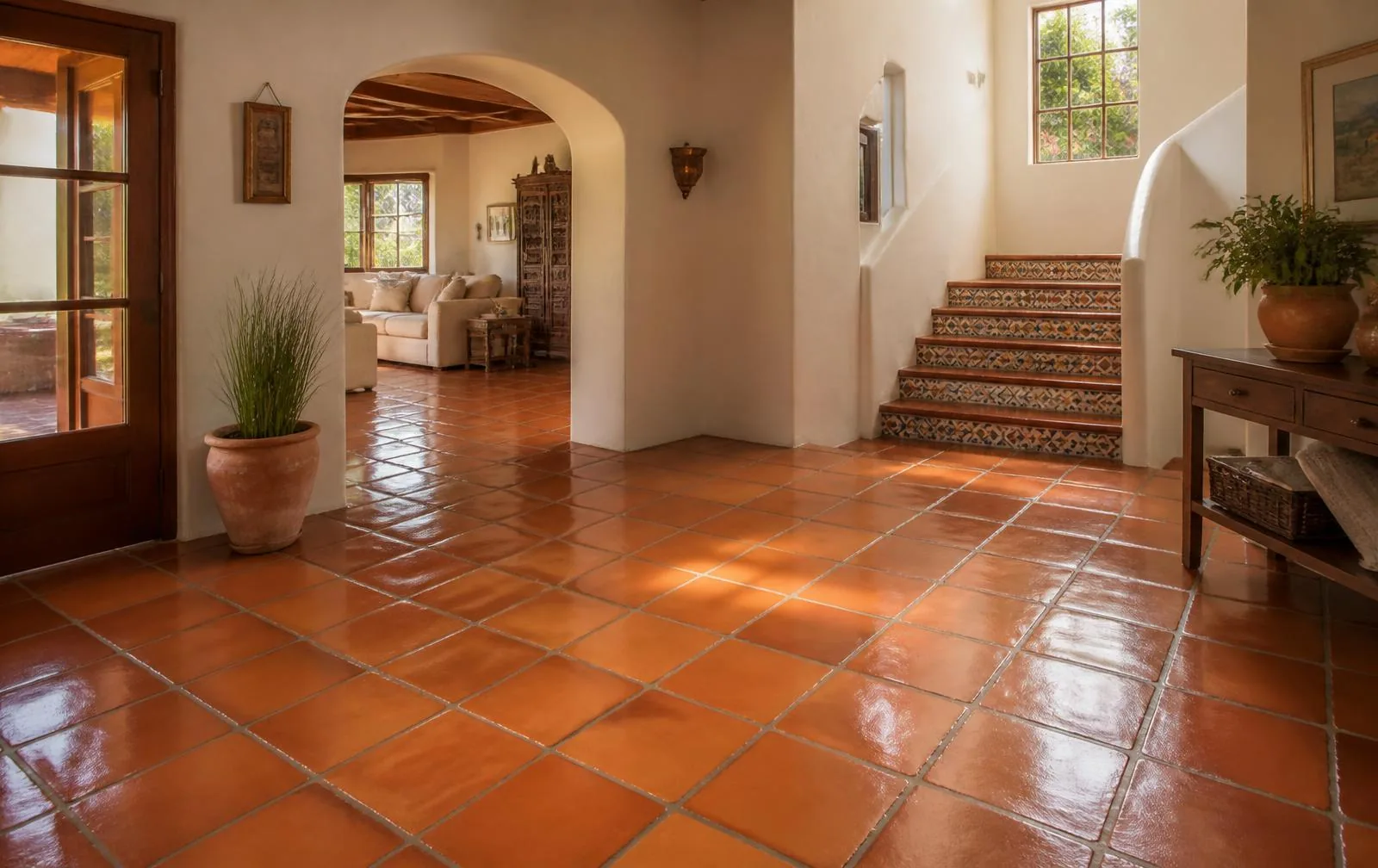

Travertine etch marks look like dull water rings, cloudy spots, or rough patches on your floor. They are not stains. They are physical damage to the stone itself. When acidic liquids touch travertine, they eat away the surface layer. This leaves a dull mark that no amount of scrubbing or mopping will remove.
If you want a clean, uniform floor again, you need physical stone restoration. This guide explains how travertine etch mark removal in Phoenix, AZ works, what causes the damage in the first place, and how to fix it permanently.
Why Travertine Etches in Phoenix Homes
Travertine is a natural limestone made primarily of calcium carbonate. Calcium carbonate reacts violently with acid. When an acidic substance touches the stone, it immediately dissolves the calcium. This chemical burn is an etch mark.
Common household acidic liquids include lemon juice, wine, coffee, tomato sauce, soda, and pet accidents. A spill left for just a few seconds is enough to alter the finish of the stone.
In the Phoenix area, two specific environmental factors cause heavy etching. First, our tap water is notoriously hard. When water dries on travertine floors or showers, it leaves white calcium deposits behind. Homeowners often try to clean this mineral buildup using hard water scale removers, CLR, or vinegar. These acidic products permanently burn travertine on contact, leaving large, cloudy white streaks across the floor.
Second, pool acid causes severe damage. Acid tracked inside on wet bare feet from the backyard pool will instantly etch stone floors. We frequently see deep etch marks leading from patio doors directly to the kitchen or bathroom.
Etch Marks vs. Stains: How to Tell the Difference
People often mistake etches for stains. You must treat them entirely differently. A stain occurs when a dark substance is absorbed deep into the pores of the stone. An etch occurs when the top layer of the stone is chemically removed.
| Characteristic | Stain | Etch Mark |
|---|---|---|
| Appearance | Darker than the surrounding stone. | Lighter, duller, or cloudy compared to the stone. |
| Texture | Smooth, matching the rest of the floor. | Often feels rough or slightly indented. |
| Visibility | Visible from all angles. | Most visible when light reflects across the floor. |
| Removal Method | Poultice powder to draw the liquid out. | Diamond honing to grind the damaged stone away. |
The Process for Travertine Etch Mark Removal Phoenix AZ
You cannot clean an etch mark away. You have to remove the damaged layer of stone to reveal the fresh, undamaged stone underneath. Here is how our professional removal and restoration process works.
Step 1: Surface Assessment
The depth of the acid burn determines our starting point. Minor etches from a quick wine spill feel smooth but look dull. Severe etches from toilet bowl cleaners or pool acid feel rough and heavily pitted. We assess the floor to choose the correct starting grit of diamond abrasive. Starting with too fine of a grit wastes time. Starting with too coarse of a grit removes more stone than necessary.
Step 2: Diamond Honing
We use heavy floor machines equipped with specialized diamond resin pads to grind away a microscopic layer of the travertine. This step physically removes the etch mark. We use water throughout this entire process to keep the diamond pads cool and completely eliminate airborne dust.
Step 3: Finishing and Polishing
Once the etch is gone, the stone is flat and uniform, but it has a very dull, matte finish. We then use progressively finer diamond pads to restore your preferred look. We can leave the stone with a soft matte finish, a medium satin sheen, or take it all the way to a high-gloss, mirror-like polish.
Step 4: Grout Cleaning and Sealing
Grinding the stone pushes water and stone slurry into the grout lines. We extract this slurry, clean the grout lines thoroughly, and dry the floor. Finally, we apply a high-quality impregnating sealer to the entire surface. This protects the open pores of the stone from absorbing future liquid spills.
DIY Travertine Etching Repair: What Works and What Fails
You can fix very minor, superficial etches yourself. You will need a specialized marble and travertine polishing powder. This powder contains micro-abrasives and polishing agents.
To use it, apply a small amount of water to the etch mark to make a paste. Rub the paste into the etch mark with a clean, soft cloth using heavy pressure for several minutes. This generates heat and friction, slightly honing and polishing the surface.
This DIY method only works on high-polish travertine and only for very light surface damage. Deep etches, rough spots, or large cloudy areas require professional machinery.
Never use scouring pads, magic erasers, sandpaper, or steel wool on travertine. These items are too aggressive. They will create deep scratches that look worse than the original etch mark and cost more to repair.
Professional Travertine Floor Restoration Phoenix AZ: Costs and Timelines
Knowing what to expect helps you plan your home maintenance budget. Travertine restoration typically costs between $2.00 and $5.00 per square foot in the Phoenix market.
The exact price depends on several factors.
- Depth of damage: Severe acid burns require more grinding passes with coarse diamonds.
- Desired finish: A high-gloss finish takes far more steps and time than a matte finish.
- Floor layout: Small, tight spaces like bathrooms take longer per square foot than large, open living rooms.
- Hole filling: Travertine naturally has voids. If your factory fill has popped out, filling these holes adds to the total cost.
Most residential jobs take one to two full days. You can walk on the floors immediately after the sealer cures, which usually takes two hours after we leave the property.
How to Prevent Future Etching on Travertine
Once your floors are restored, you must change how you clean them. Proper habits will keep the stone looking perfect for years.
Throw away any cleaning product containing vinegar, citrus, bleach, or ammonia. Buy a pH-neutral stone cleaner formulated specifically for natural stone.
Wipe up spills immediately. Do not let wine, citrus juice, salad dressing, or pet accidents sit on the floor. The longer acidic liquid sits, the deeper it burns.
Place floor mats at high-risk entryways. Use heavy mats near the pool deck to catch acidic pool water before it reaches the stone. Place rugs in front of kitchen sinks and stoves to catch acidic food splatters.