

Complete Guide · Updated For Arizona Homes
Pool Deck Stone Care
A pool deck is not really a material question, it is an environment question. Chlorine, sun, and constant wet dry cycling age any stone here roughly twice as fast as the same stone indoors.
Why Poolside Stone Is Its Own Category
Pool deck stone care is less about one material and more about one environment. Chlorine, sun, splash out, and constant wet dry cycling accelerate wear on whatever stone surrounds a Phoenix pool.
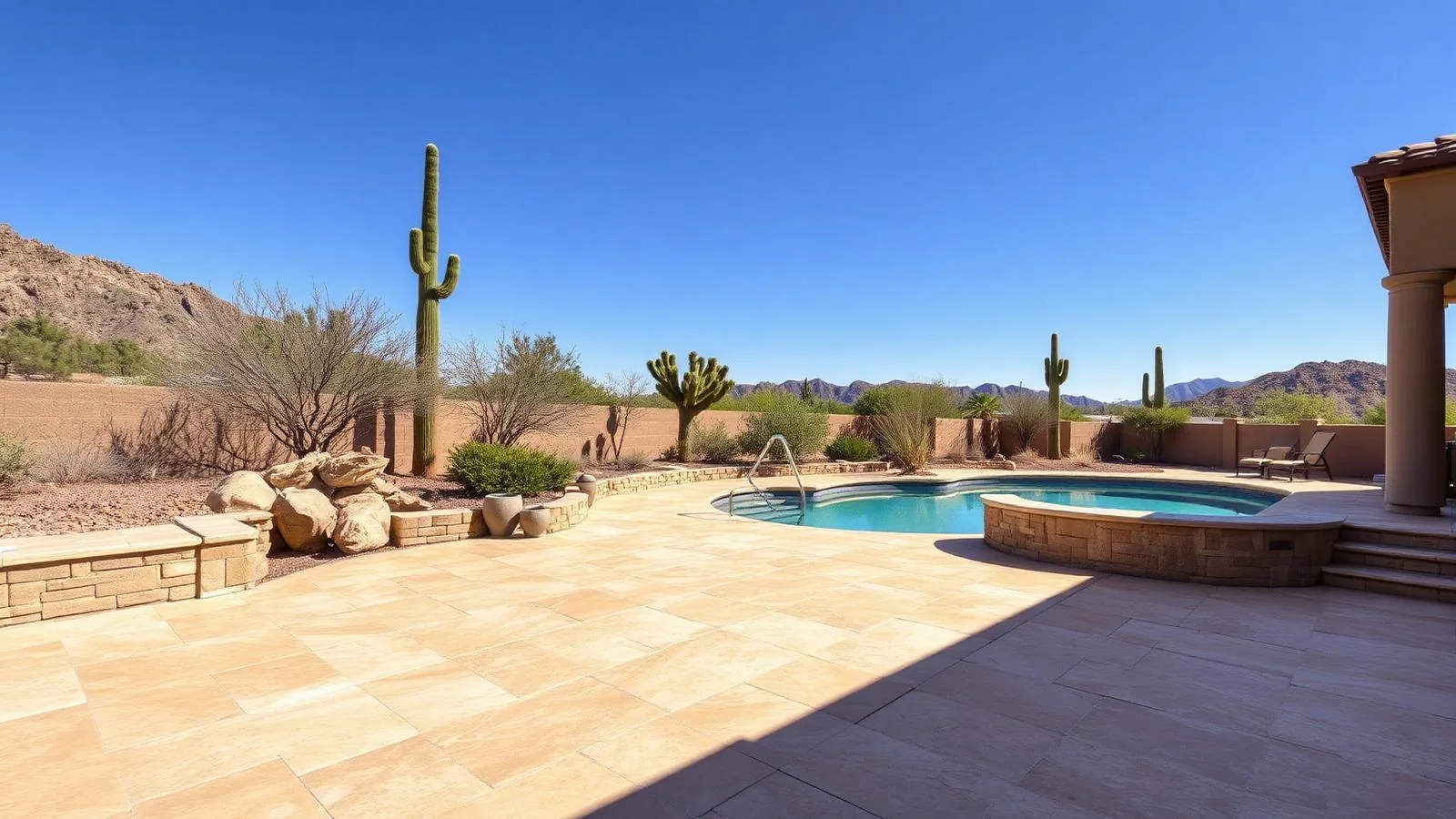
The materials themselves are familiar, most commonly travertine, flagstone, or textured porcelain and pavers. What changes is how fast they wear and how much a working sealer matters.
This guide addresses the shared challenges of poolside stone specifically, with material notes throughout, and links to the relevant material guide when you need the full care detail for the stone you actually have.
Constant Wet Dry Cycling
Splash out and evaporation cycle the surface every single day the pool is used.
Chlorine And UV Exposure
Pool chemistry plus full Arizona sun degrades sealers far faster than interior conditions.
Reseal Every 9 To 12 Months
Noticeably more frequent than the same stone would need on an interior floor.
Slip Resistance Is Safety
Traction on a pool deck is a safety requirement, not an aesthetic preference.
Know Which Deck Material You Have
The environment is shared, the material is not. Each deck surface has its own absorption rate and sealer schedule underneath the same pool chemistry.
Most common around Phoenix pools, warm and matte
Frequent resealing due to sun and chlorine exposure
Open pores and efflorescence, see the full Travertine Care guide
Textured, irregular, naturally slip resistant
Porous and needs sealing, brushed in multiple directions
Algae establishing in the cleft texture in shaded spots
Uniform, modern, low sheen
Very low maintenance with minimal sealing needed
Joint sand and grout wear, see the Porcelain Tile Care guide
Uniform cast units, often paired with stone decking
Its own sealer schedule, separate from adjacent natural stone
Efflorescence and color fade under direct sun
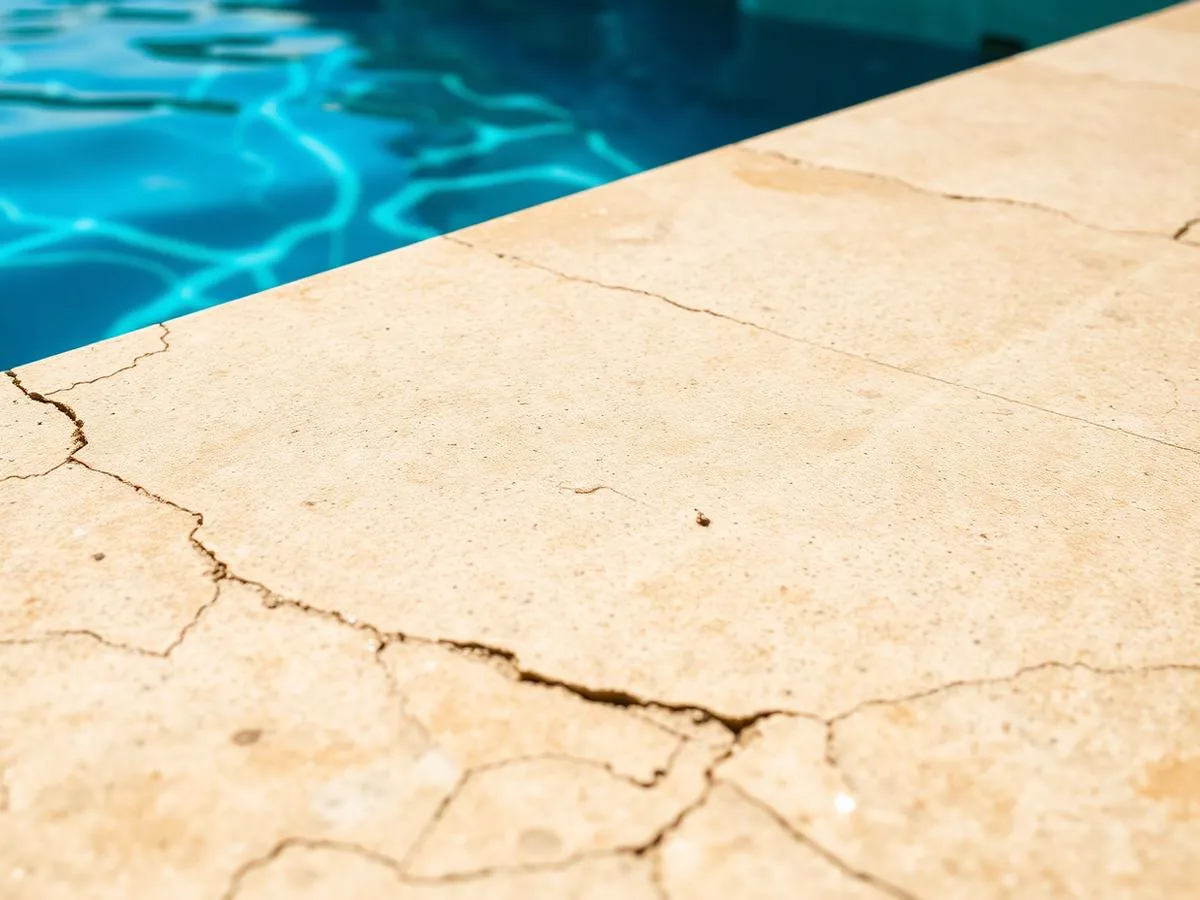
Catch It Early
A pool deck warns you in ways an interior floor never does. Traction changes are the ones to take seriously.
A Routine You Can Actually Keep
Rinse often, watch the shaded areas, and reseal on a shorter cycle than you would indoors.
- Hose down to clear chlorine residue and dust
- Sweep loose debris before it embeds in the texture
- Check slip resistance in shaded and damp areas where algae grows fastest
- Spot treat any chlorine haze
- Reseal with a sealer rated for pool chemical exposure
- Plan on more frequent resealing than the same stone would need indoors
The Deep Clean Process
Five steps, in order. Dry time before resealing is the step people skip and regret.
- 01
Hose Down Thoroughly
Clear chlorine and mineral residue before applying any cleaner so products work on stone, not scale.
- 02
Use A Pool Safe Neutral Cleaner
Never a generic acid based efflorescence remover near pool equipment or plaster.
- 03
Scrub Textured And Cleft Surfaces
A stiff brush reaches the shaded spots where algae establishes first.
- 04
Rinse Completely
Residue left on a deck becomes slippery once it is wet again.
- 05
Allow Full Dry Time Before Sealing
Trapped moisture under a new sealer coat causes cloudy failure that has to be stripped.
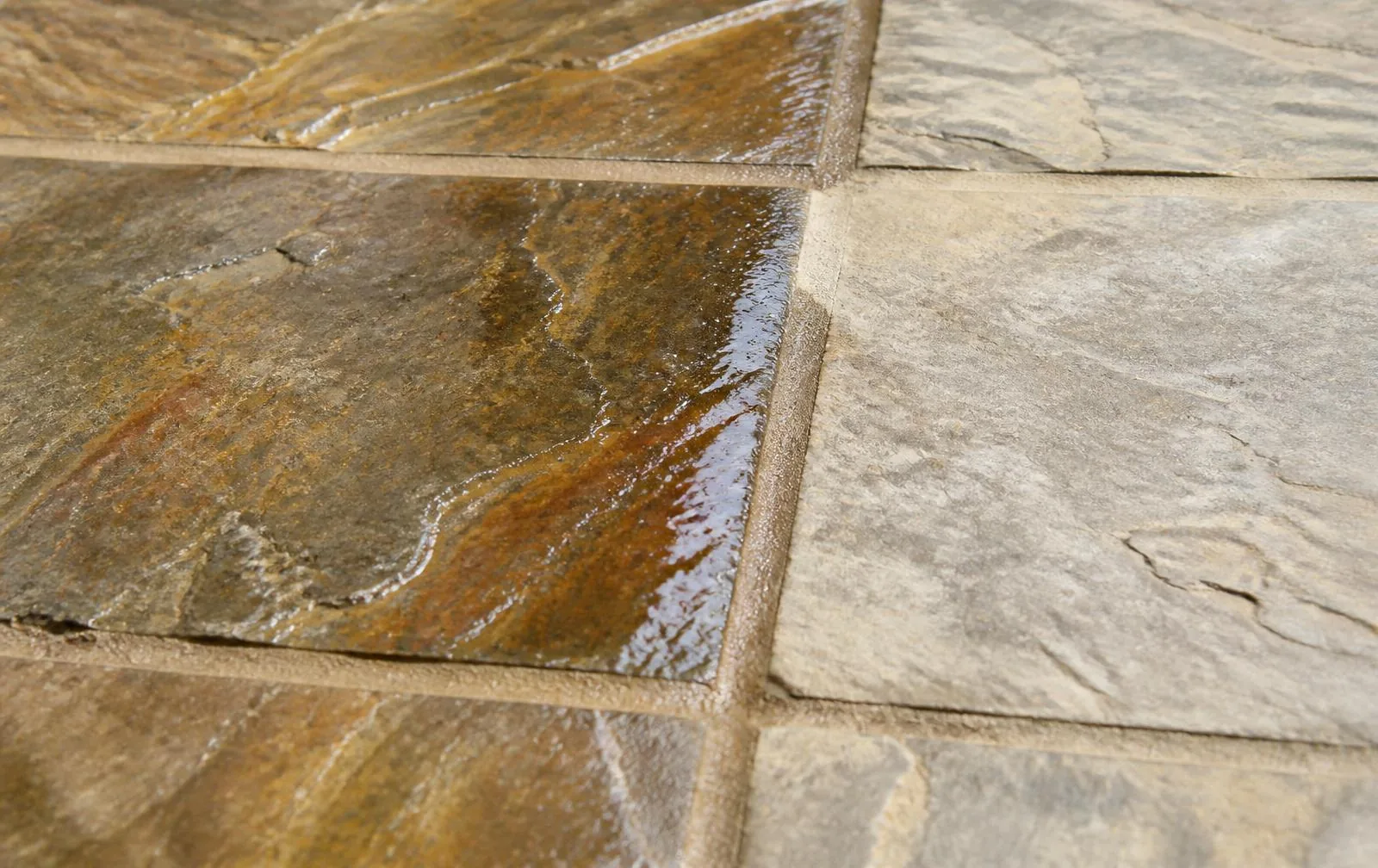
Sun And Chlorine Age A Deck Sealer Twice As Fast
Sun and chlorine age a pool deck sealer roughly twice as fast as the same stone would wear indoors.
That is the single biggest reason pool deck stone needs a shorter reseal cycle than interior floors of the same material. Matching an indoor schedule out here is how decks end up bare.
- Use a sealer rated for chlorine and UV exposure
- Plan a nine to twelve month cycle rather than a multi year one
- Watch sun exposed zones, which fail before shaded ones
- Reseal before traction changes, not after
Stain Chart
Poolside staining has its own sources. Sunscreen and pool chemistry account for most of what shows up.
Chlorine and calcium haze near the waterline
Pool safe descaling cleaner, applied briefly and rinsed
Algae in shaded damp areas
Oxygen based cleaner worked in with a stiff brush
Rust from metal furniture
Poultice, kept away from pool equipment
Suntan oil and sunscreen residue
Degreasing pH neutral cleaner, a commonly overlooked source of slipperiness
Do This, Never That
Do
- Reseal on a shorter cycle than interior stone
- Hose down regularly to clear chlorine residue
- Prioritize a slip resistant finish for wet areas
- Treat shaded damp zones before algae establishes
Don't
- Acid based cleaners near pool equipment or plaster
- Letting algae establish in shaded spots before treating it
- Assuming a pool deck sealer schedule matches an interior floor of the same material
- Sealing over a deck that has not fully dried
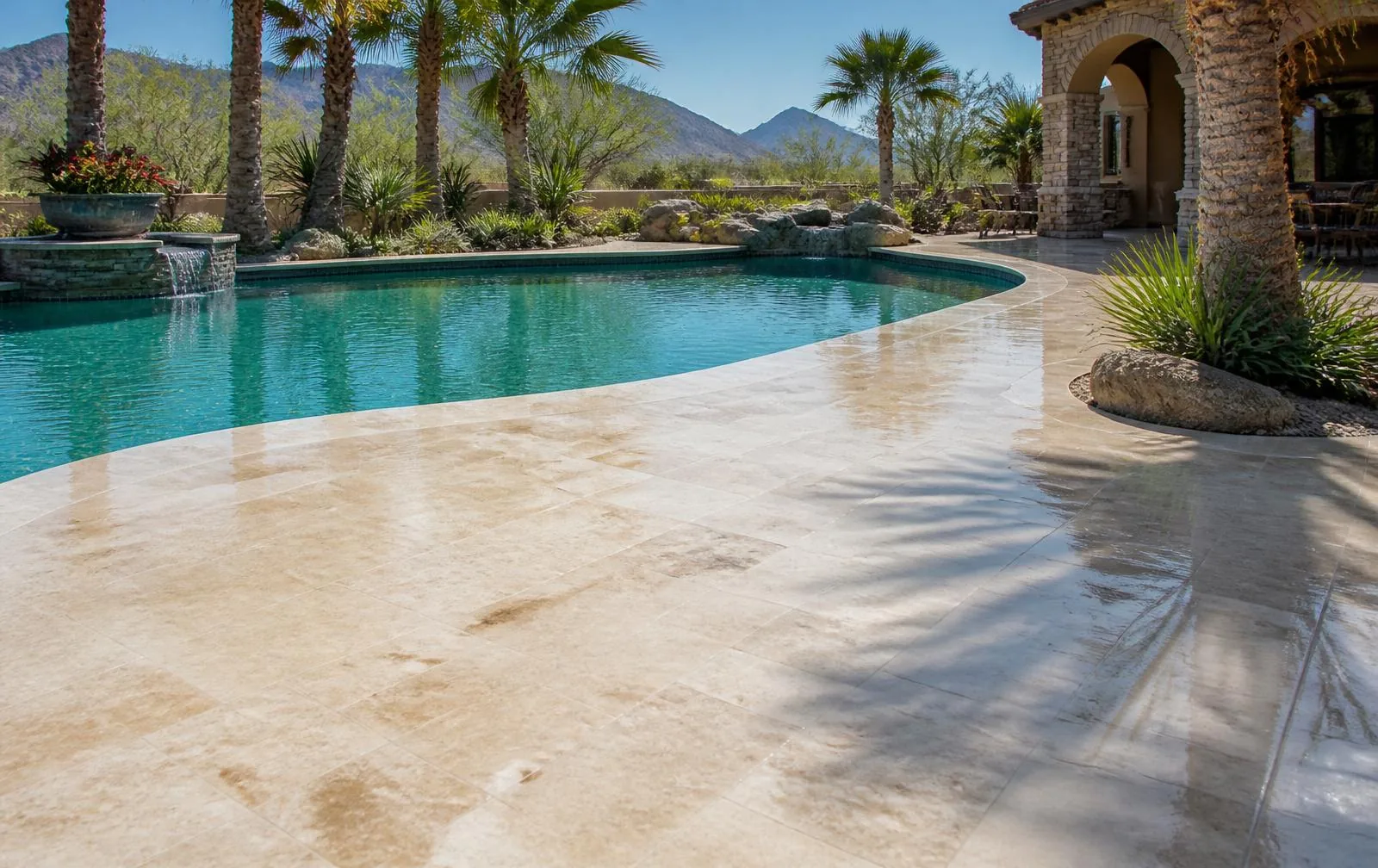
What Actually Gets Sealed
The full surface takes sealer, and the product rating matters as much as the coverage in this environment.
The Full Deck Surface
Every square foot takes a sealer rated for chlorine and UV, since a standard interior product breaks down faster here.
Coping And Waterline Stone
Splash out zones absorb the most pool chemistry and get the closest attention at each reseal.
Joints And Expansion Gaps
Joints seal alongside the stone, and any cracking gets addressed before the sealer goes down.
When To Call A Pro
Homeowner care handles maintenance. These four situations are restoration work, and waiting on them almost always raises the cost.
Persistent Slipperiness After Cleaning
Traction that does not return points to sealer breakdown, and that is a safety issue.
Widespread Efflorescence
Mineral deposits across the whole deck indicate moisture moving through the stone from below.
Cracking At Expansion Joints
Heat cycling damage at joints needs repair before water reaches the substrate.
No Reseal In Over A Year
In full Arizona sun exposure, a deck past twelve months should be assessed rather than simply recoated.
Want A Read On Your Stone?
Free assessment across Scottsdale and the greater Phoenix Valley.
Pool Deck Stone Questions
Related Pages
Travertine Care
The most common Phoenix pool deck stone, in full detail.
Learn moreNatural Stone Sealing Guides
When sealing actually matters, which products to use, and how often to reapply.
Learn moreGrout Cleaning & Sealing
Joints and grout around deck stone: cleaning, sealing, and repair.
Learn moreReady when you are
RESTORE YOUR STONE.
GET A FREE BID.
Design-builds, restoration projects, specialty projects, and remodels across the Valley · Family-owned and locally operated.
- Mon–Fri · 7am to 4pm
- Sat · Closed
- Sun · Closed