

Complete Guide · Updated For Arizona Homes
Travertine Care
Travertine is the most porous stone we work on, and in Phoenix it takes the hardest hit: UV bleaching, hard water, and pool chemistry. Sealing is not optional here, it is the whole game.
What Travertine Actually Is
Travertine is a porous sedimentary stone full of natural pits and channels formed by mineral rich water moving through it over time.
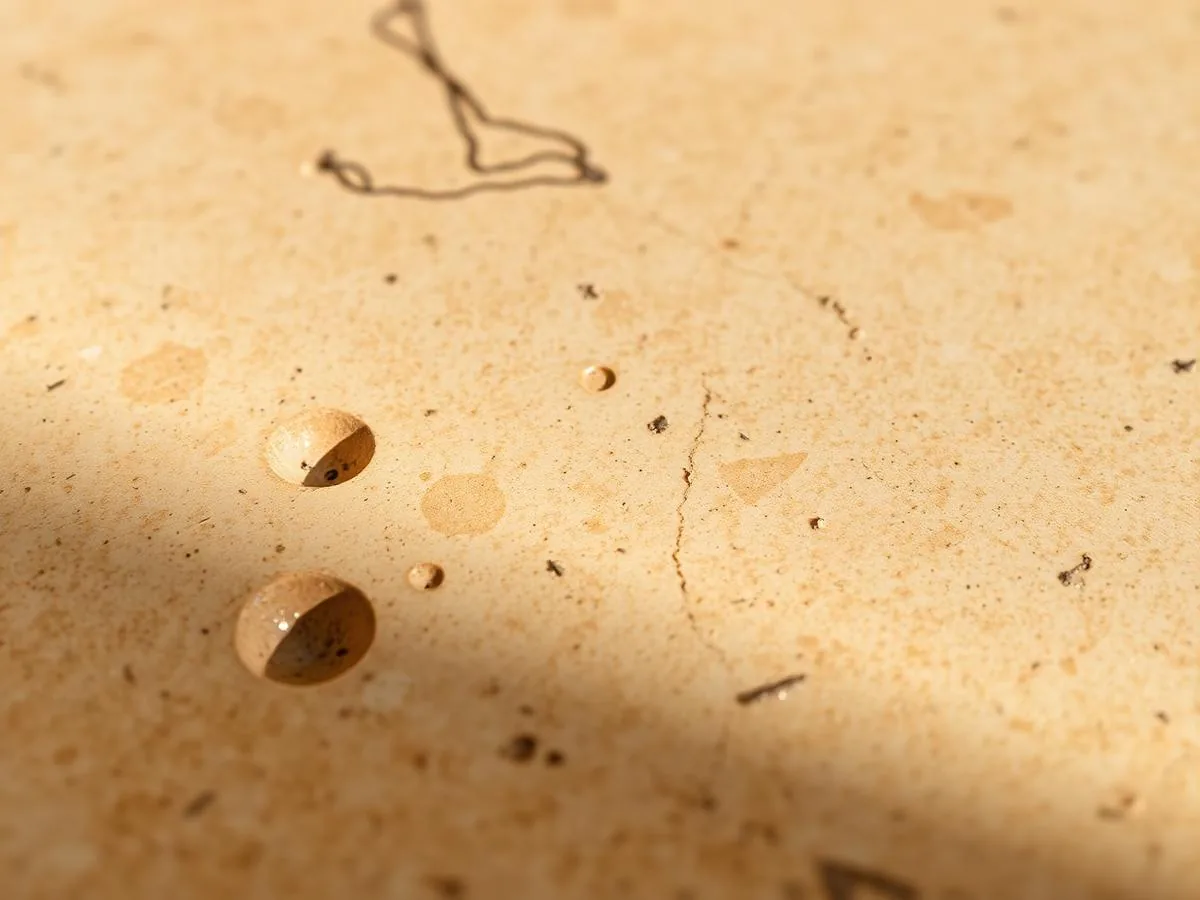
Left unsealed, travertine absorbs water, oil, and acidic spills, which leads to staining and pitting that gets worse the longer it goes untreated.
In Phoenix, the biggest stressors are intense UV bleaching, hard water mineral deposits, and pool chemical exposure on outdoor installations. That combination is why local travertine needs a tighter reseal schedule than the same stone would in a milder climate.
Highly Porous
Needs sealing more than any other stone on this list. The pits and channels run all the way through the stone.
Penetrating Sealer Required
A penetrating or impregnating sealer soaks in and protects from within. Topical products sit on top and fail fast in the sun.
Reseal Every 9 To 18 Months
Nine to twelve months for exterior and pool deck surfaces, twelve to eighteen months for interior installations.
Common In Phoenix
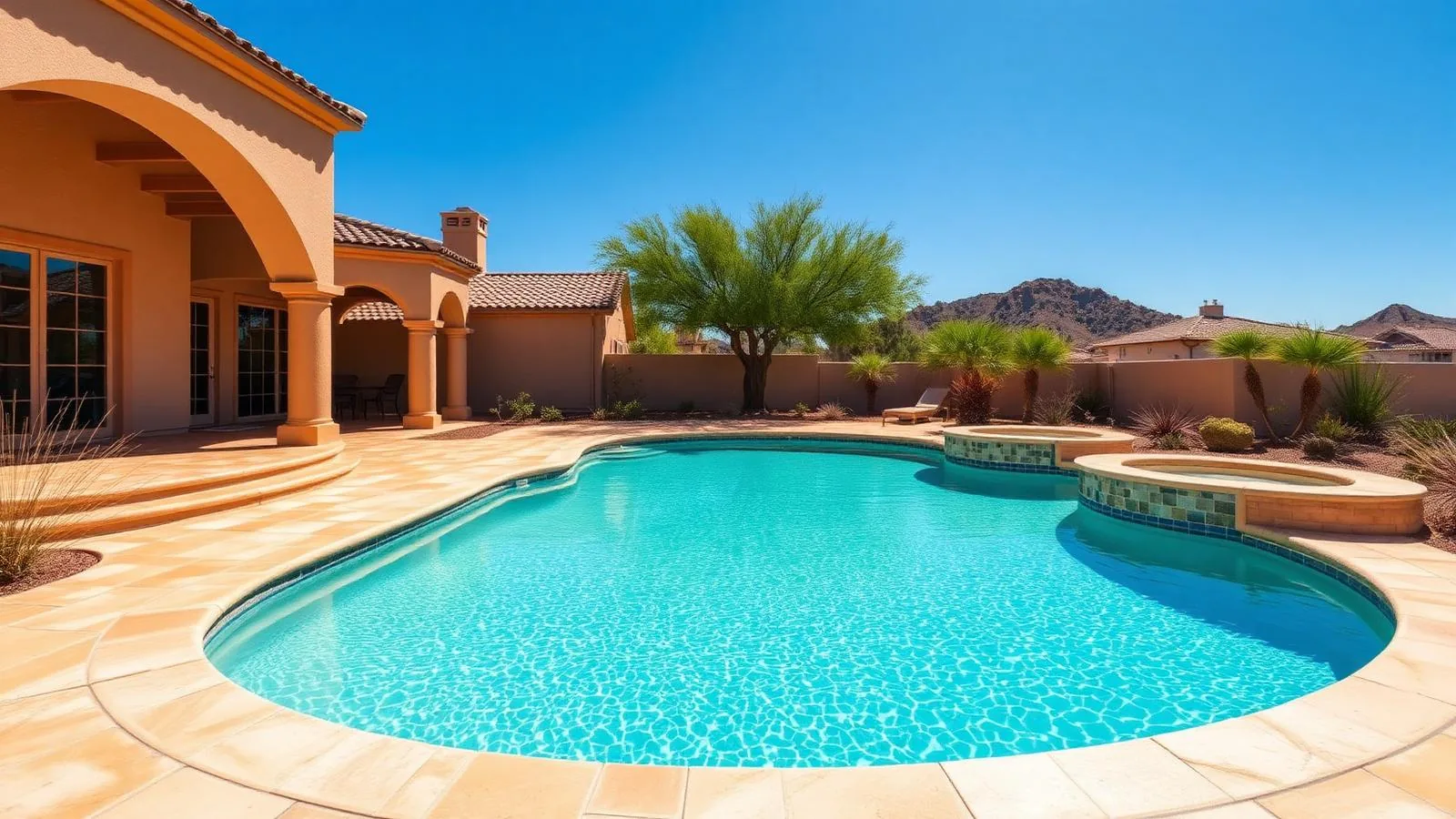
Pool decks and patios across the Valley are travertine, which puts it in direct sun and constant splash out.
Know Which Travertine You Have
The finish decides how often you reseal and how the surface behaves. Unfilled travertine exposes far more surface area than filled and honed, and it shows.
Factory filled holes, smooth matte finish
Standard neutral cleaner and scheduled resealing
Fill material eroding out of the holes
Natural holes left open, rustic look
Needs more frequent resealing since more surface area is exposed
Grit and debris packing into open holes
Glossy, used mainly indoors
Strict pH neutral cleaning, no acids at all
Etching and scratches, which show far more easily
Textured, slip resistant
Soft brush agitation to clear the texture
Grime trapped in the texture on pool decks
Catch It Early
Travertine tells you when the sealer has given out. These are the signals worth acting on before pitting sets in.
A Routine You Can Actually Keep
Travertine care is simple, but the product choice matters more than the effort. Acidic cleaners etch calcium carbonate on contact.
- Dry dust mop with no beater bar
- Damp mop with a pH neutral stone cleaner only, never vinegar, bleach, or ammonia, which all etch calcium carbonate
- Check the fill holes for erosion, especially on pool decks where splash out is constant
- Professional sealer inspection
- Full reseal on schedule: nine to twelve months exterior, twelve to eighteen months interior
The Deep Clean Process
Five steps, in order. The rinse matters most here, because leftover residue on porous stone reads as a cloudy haze.
- 01
Dry Sweep First
Remove grit before any water touches the surface. Grit ground into soft travertine is what dulls it.
- 02
Apply Neutral Stone Cleaner
pH neutral only. Anything acidic will etch the calcium carbonate the stone is made of.
- 03
Agitate The Texture
Work unfilled holes and brushed surfaces with a soft brush, where grime sits below the surface line.
- 04
Rinse Fully
Residue left behind is the number one cause of the cloudy haze homeowners mistake for worn stone.
- 05
Dry And Inspect
Check the fill holes and the sealer sheen while the surface is clean and easy to read.
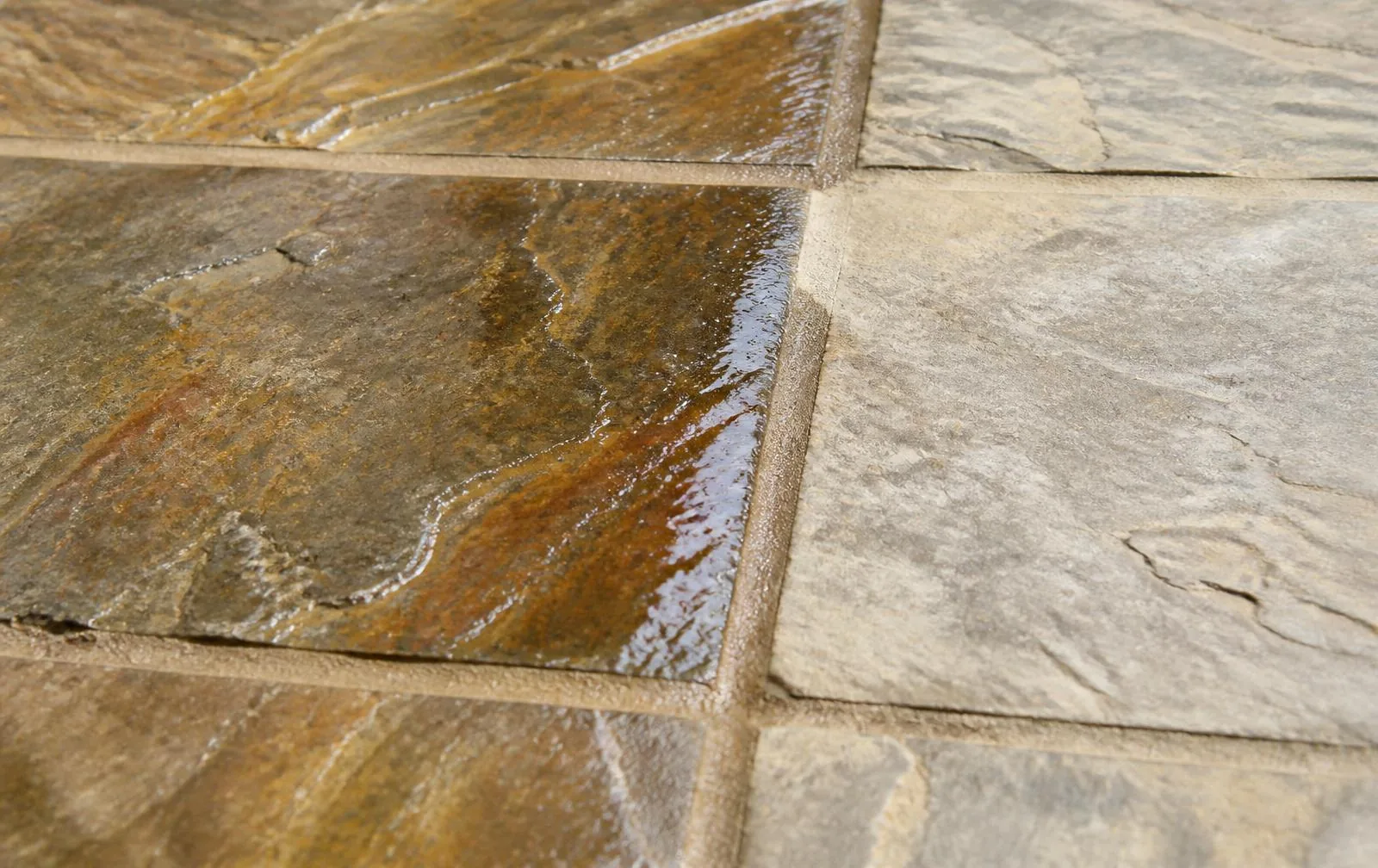
Sealer Breakdown Is Where Travertine Fails
Sealer breakdown is travertine's real failure point, not the stone itself. Once the sealer fails, staining and pitting accelerate fast in Arizona's sun and hard water.
That is why the reseal interval on travertine is shorter than almost anything else we maintain. Missing one cycle on a pool deck can turn a maintenance visit into a restoration project.
- Run a water droplet test whenever the surface stops looking right
- Use a penetrating sealer, never a topical coating in full sun
- Reseal pool decks on the tighter nine to twelve month cycle
- Refill eroded holes before resealing, not after
Stain Chart
Match the stain to the method. Generic hardware store removers are the fastest way to permanently etch travertine.
Oil based stains
Baking soda poultice, applied thick, covered, and allowed to draw the oil out over several hours
Hard water and mineral deposits
Travertine safe mineral remover only. Never generic lime or rust removers, which contain acid that etches the stone
Organic stains from leaves and food
Enzymatic poultice, which breaks the organic material down rather than bleaching it
Rust
Specialty rust poultice. Never a wire brush, which scars the surface permanently
Do This, Never That
Do
- Reseal on schedule, tighter on exterior and pool deck surfaces
- Use pH neutral cleaners exclusively
- Refill eroded holes promptly before they collect debris
- Rinse thoroughly after every wet clean
Don't
- Acidic cleaners of any kind, including vinegar and lime removers
- Generic ceramic tile sealer instead of a stone specific sealer
- Power washing at close range, which dislodges fill material
- Letting standing water sit on unsealed stone

What Actually Gets Sealed
The entire surface needs a penetrating or impregnating sealer. This is the one material on this list where sealing the whole field, not just the grout, is essential.
The Full Stone Field
Every square inch takes sealer. Travertine's porosity means unsealed areas stain first and stand out.
Grout And Joints
Joints between travertine pavers seal alongside the stone, and crumbling grout gets repaired before sealing.
Filled Holes
Fill material is more porous than the stone around it. Refill eroded holes first, then seal the whole surface.
When To Call A Pro
Homeowner care handles maintenance. These four situations are restoration work, and waiting on them almost always raises the cost.
Visible Etching Or Dulling
Etching is physical damage to the stone surface. It gets honed and refinished, not cleaned away.
Cracked Tiles Or Lippage
One paver sitting higher than its neighbor is a trip hazard and needs proper leveling.
Holes That Have Lost Fill
Open pits collect debris and moisture. Refilling is a matched material job, not a caulk job.
No Reseal In Two Or More Years
Past two years the stone has almost certainly been absorbing. Assessment first, then restoration and reseal.
Want A Read On Your Stone?
Free assessment across Scottsdale and the greater Phoenix Valley.
Travertine Questions
Related Pages
Pool Deck Stone Care
Sun, splash out, and pool chemistry: how to keep deck stone sealed and safe underfoot.
Learn moreNatural Stone Sealing Guides
When sealing actually matters, which products to use, and how often to reapply.
Learn moreLimestone Care
A close cousin to travertine: soft, acid sensitive, and dependent on a working sealer.
Learn moreReady when you are
RESTORE YOUR STONE.
GET A FREE BID.
Design-builds, restoration projects, specialty projects, and remodels across the Valley · Family-owned and locally operated.
- Mon–Fri · 7am to 4pm
- Sat · Closed
- Sun · Closed