

Complete Guide · Updated For Arizona Homes
Porcelain Tile Care
What porcelain is, why it is the default choice for Phoenix entryways, patios, and pool decks, and the short list of things that actually damage it: grout, polished finishes, and rectified edges.
What Porcelain Tile Actually Is
Porcelain is a denser, more refined cousin of ceramic, made from finer clay fired at a much higher temperature, giving it water absorption below 0.5% compared to standard ceramic's higher absorption rate.
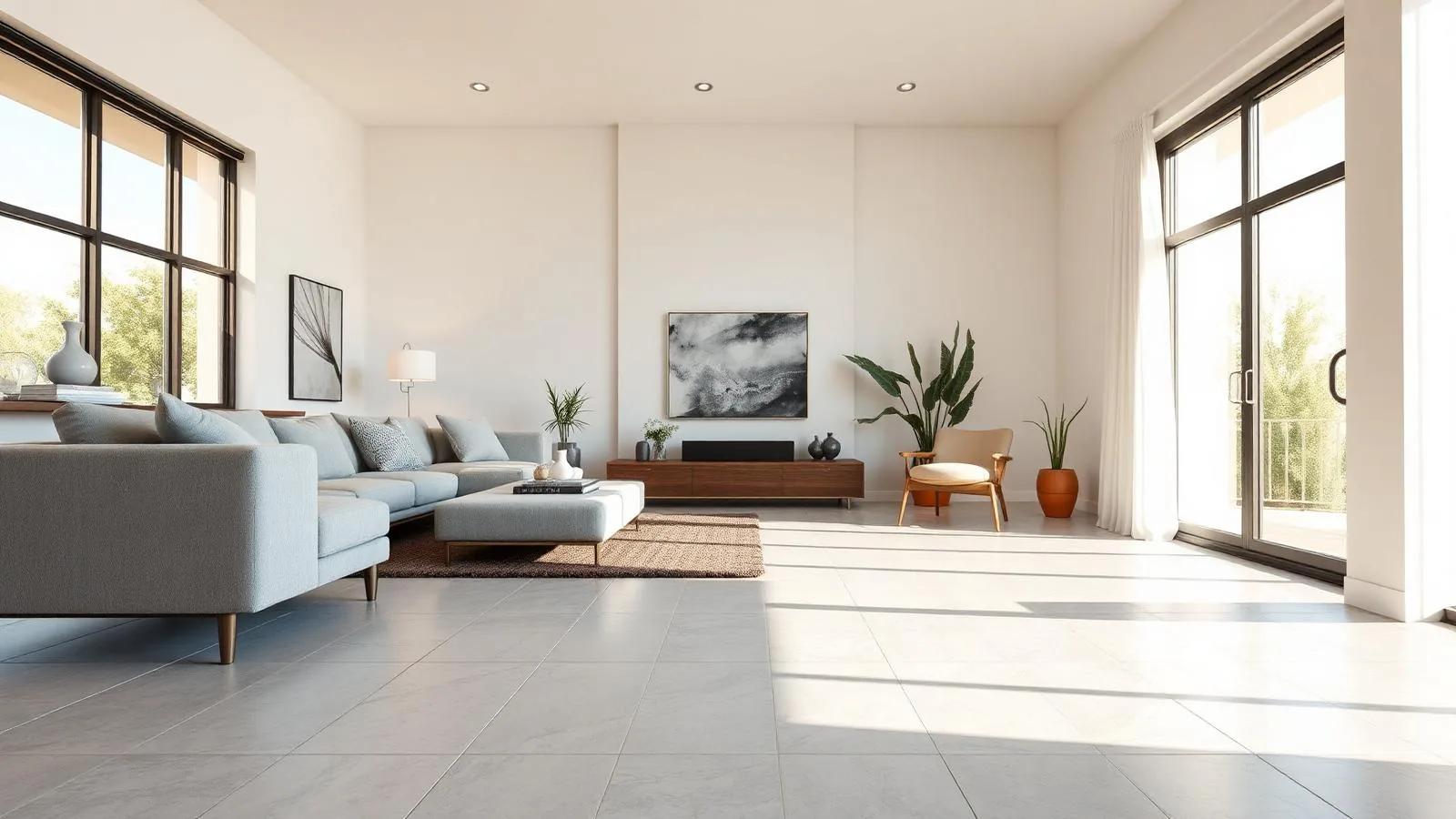
That density is why porcelain is the standard choice for entryways, outdoor patios, and high traffic Phoenix homes. It barely absorbs anything, resists Arizona's heat and UV without fading, and is dense enough to handle heavy foot traffic without wearing through.
The trade off is where it fails: the grout between the tiles, polished finishes that scratch, and thin rectified edges that chip. Everything on this page comes back to those three.
Dense Body
Fired at higher heat than ceramic, making it far less porous and more resistant to chipping.
Near Zero Absorption
Under 0.5% water absorption means it almost never needs sealing, unlike natural stone.
Arizona Factor
Handles direct sun and heat with virtually no fading or thermal cracking, the default for Phoenix patios and pool surrounds.
Long Lifespan
With proper grout care, a porcelain floor can outlast most other flooring types in the house.
Know Which Porcelain You Have
Care changes with the finish. Polished, matte, and rectified large format tile all behave differently, and the wrong product on the wrong finish is how most damage starts.
Colored glass layer on top, wide color range
Care like ceramic, but more durable underneath
Glaze scratching from abrasive pads
Color runs through the entire tile
Neutral cleaner, standard maintenance
Common in commercial grade residential floors, chips do not show
Mechanically buffed to a glossy shine
Benefits from a penetrating sealer despite low absorption
Opened surface pores and scratches that show easily
Slip resistant surface for pool decks and showers
Soft brush agitation, thorough rinse
Grime trapped in grout and texture valleys
Large format tiles with a printed finish
Careful grout joint care along thin rectified edges
Chipping at rectified edges
Catch It Early
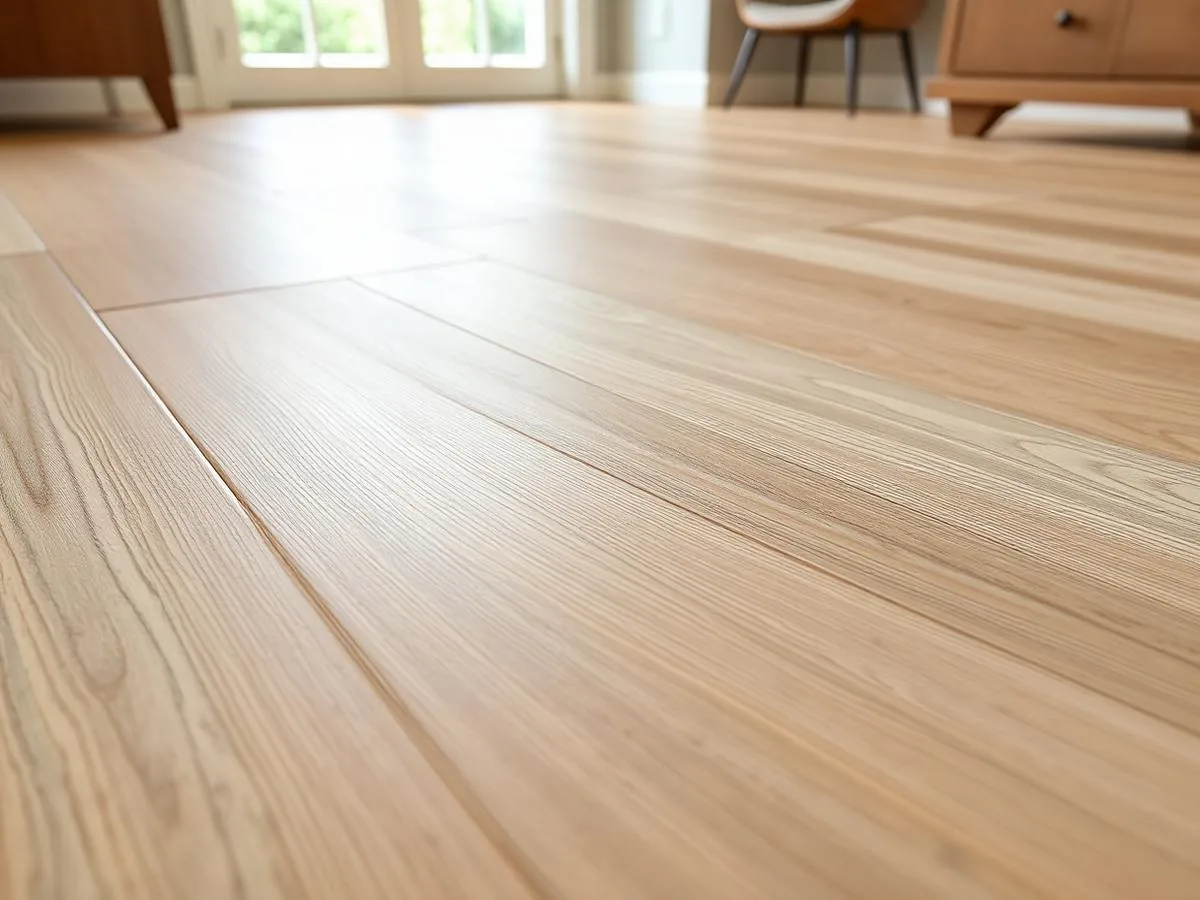
Porcelain is tough, so problems show up at the edges and joints long before the tile body gives out. These are the signals worth acting on.
A Routine You Can Actually Keep
Porcelain asks for less than most floors. Keep grit off the surface weekly and the yearly work stays small.
- Dry sweep or vacuum with no beater bar to prevent grit scratching polished finishes
- Damp mop with a pH neutral cleaner
- Check grout lines for early staining or wear
- Deep clean textured and matte tile with a soft bristle brush to clear grime from the surface texture
- Professional grout inspection and resealing if needed
- Inspect rectified edges for chips at high traffic transitions
The Deep Clean Process
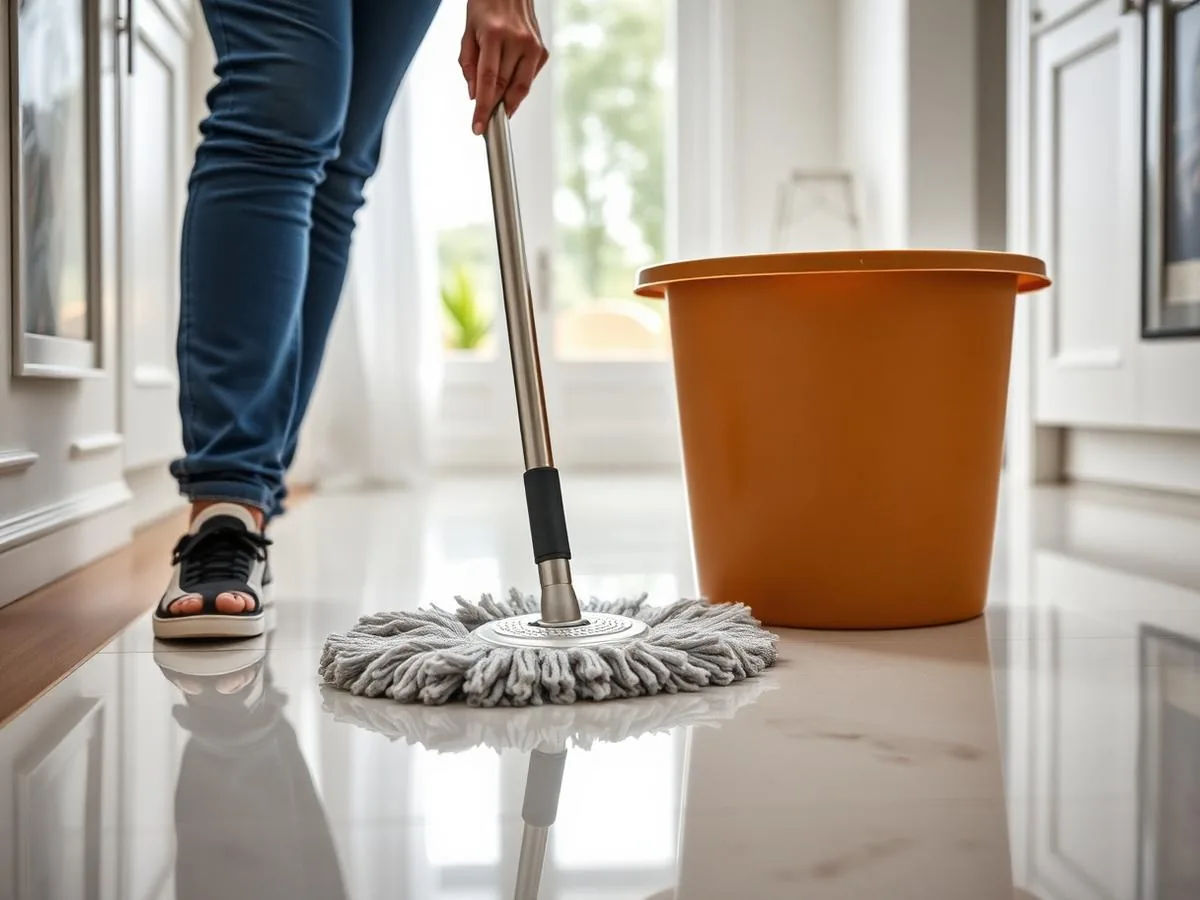
Five steps, in order. The rinse is the one people skip, and it is the reason so many porcelain floors read as cloudy.
- 01
Clear And Dry Sweep
Remove grit first. Grit is what actually scratches polished porcelain, not the mopping itself.
- 02
Apply pH Neutral Cleaner
Avoid vinegar or acidic cleaners on polished or metallic glaze finishes, which can dull the surface over time.
- 03
Agitate Textured Areas
Use a soft brush on matte and textured tile where grime sits in the surface texture, not just the grout.
- 04
Rinse With Clean Water
Leftover cleaner residue is the number one cause of the cloudy film homeowners mistake for a worn out floor.
- 05
Dry And Inspect
Check grout lines and rectified edges while the floor is clean and easy to see clearly.
Grout Is Still Where Porcelain Fails
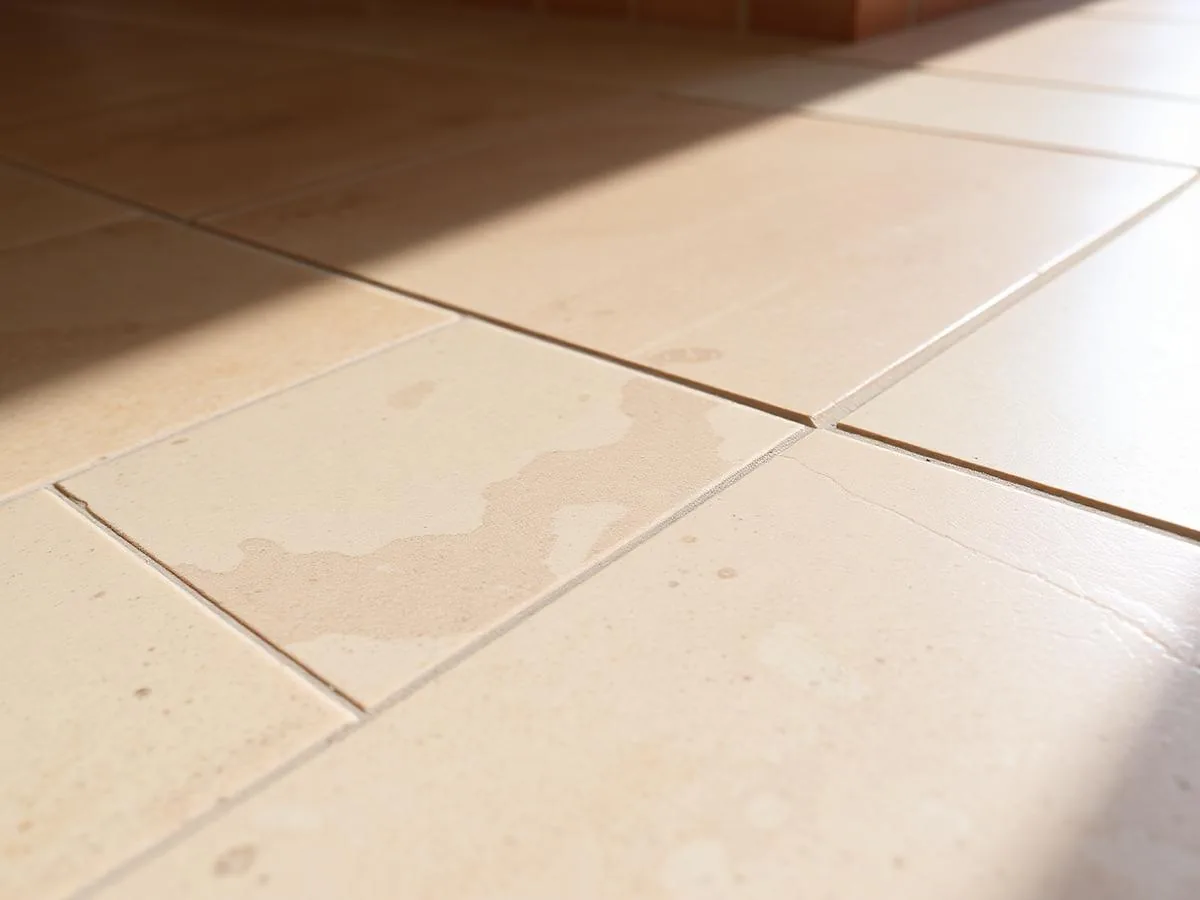
Even though porcelain tile itself barely absorbs anything, the grout between the tiles is just as vulnerable as it is on any other tile floor.
Rectified porcelain's thin grout joints actually stain faster per square inch of grout, because there is less grout to dilute the damage.
- Seal grout after every professional restoration
- Color sealing both protects and evens out the shade
- Replace failing caulk at every change of plane
- Never let standing water sit along a joint
Stain Chart
Match the stain to the method. When in doubt, test in a closet or under an appliance before treating an open floor.
Grout haze (post installation)
Specialty sodium bisulfate haze remover. Never household acid cleaners on nearby glazed edges
Hard water spots
Mild descaling cleaner safe for glazed surfaces. Porcelain tolerates mild acidic cleaners occasionally, but not daily use
Rust stains
Poultice with a rust specific, stone safe remover
Grease and cooking oil
Degreasing pH neutral cleaner, let it dwell before wiping
Do This, Never That
Do
- Use pH neutral cleaners
- Dry sweep before wet mopping
- Address grout haze quickly after a new installation
- Use soft brushes on textured tile
Don't
- Abrasive scouring pads on polished finishes
- Vinegar or bleach as a daily cleaner
- Ignoring lippage, a trip hazard that gets worse over time
- Pressure washing textured pool deck porcelain at close range, which can degrade grout
What Actually Gets Sealed
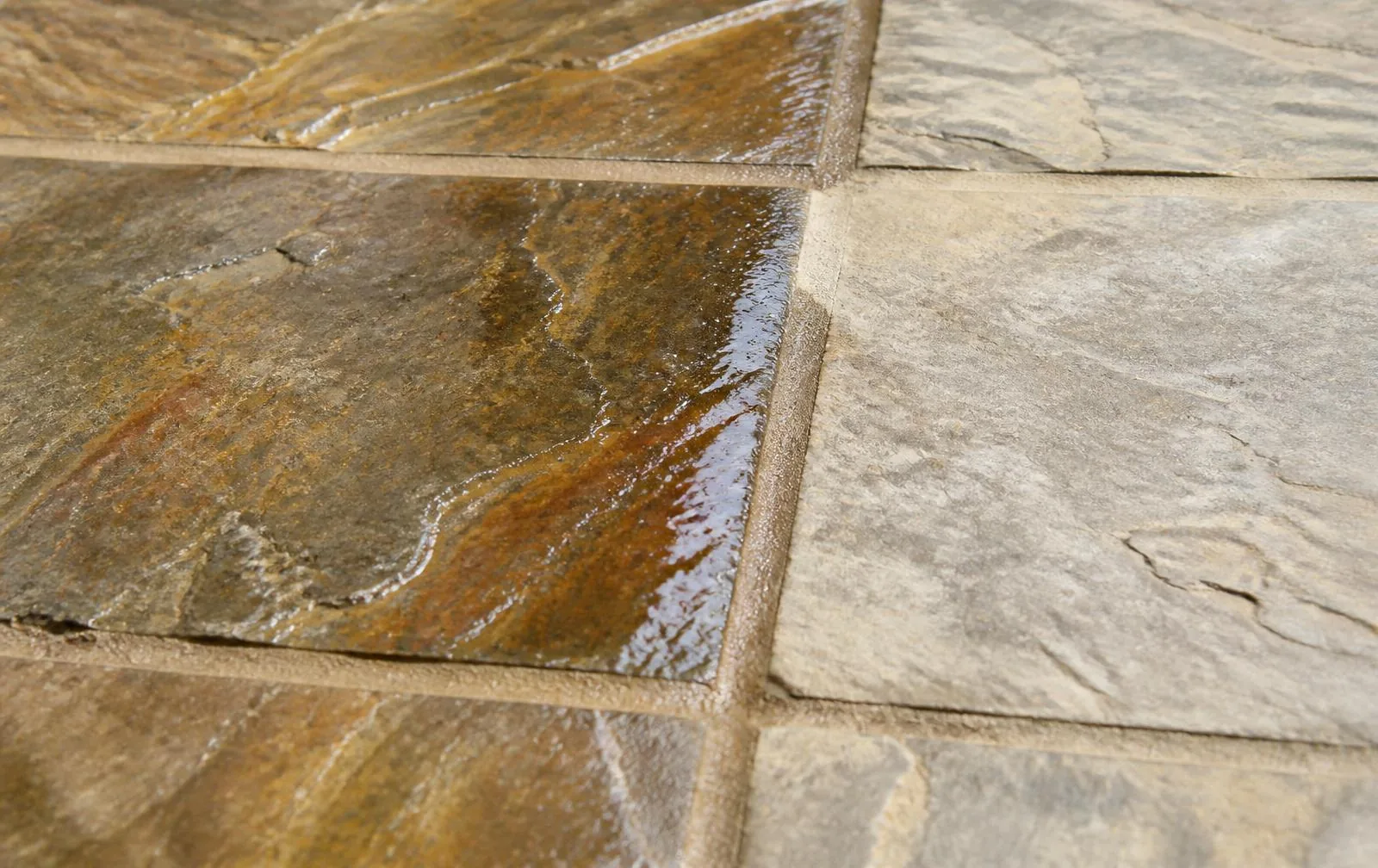
The porcelain tile face rarely needs sealing because of its density. Grout joints and polished porcelain surfaces are the two exceptions worth sealing.
Porcelain Tile Face
No sealer needed. Under 0.5% absorption means topical products sit on top and eventually peel or haze.
Cement Grout
Penetrating or color sealer after every restoration. Thin rectified joints benefit the most.
Polished Porcelain
Mechanical buffing opens the surface pores slightly, so a penetrating sealer helps resist staining and water spotting.
When To Call A Pro
Homeowner care handles maintenance. These four situations are restoration work, and waiting on them almost always raises the cost.
Lippage Between Tiles
One tile sitting higher than its neighbor is a trip hazard and needs professional leveling, not a surface fix.
Cracked Or Chipped Edges
Rectified edges chip cleanly and visibly. Repair or replacement keeps the joint line reading straight.
Grout Haze That Will Not Clear
If standard household methods have not cleared it, the haze needs a specialty remover applied correctly.
Large Format Tile Cracking
Cracks across large format tile point to substrate issues, not just surface damage, and need assessment first.
Want A Read On Your Floor?
Free assessment across Scottsdale and the greater Phoenix Valley.
Porcelain Tile Questions
Related Pages
Ceramic Tile Care
How glazed ceramic behaves, what damages it, and the routine that keeps it looking new.
Learn moreGrout Cleaning & Sealing
The weak point on every tile floor: how to clean, seal, and color seal grout joints.
Learn moreNatural Stone Sealing Guides
When sealing actually matters, which products to use, and how often to reapply.
Learn moreReady when you are
RESTORE YOUR STONE.
GET A FREE BID.
Design-builds, restoration projects, specialty projects, and remodels across the Valley · Family-owned and locally operated.
- Mon–Fri · 7am to 4pm
- Sat · Closed
- Sun · Closed