

Complete Guide · Updated For Arizona Homes
Quarry Tile Care
Quarry tile was built for commercial kitchens before it reached Southwest entryways. It is dense, hard, and hard wearing, which is exactly why the grout usually fails long before the tile does.
What Quarry Tile Actually Is
Quarry tile is a dense, unglazed clay tile fired at high temperatures, originally developed for commercial kitchens and industrial floors before becoming popular in Southwest residential entryways, mudrooms, and patios.
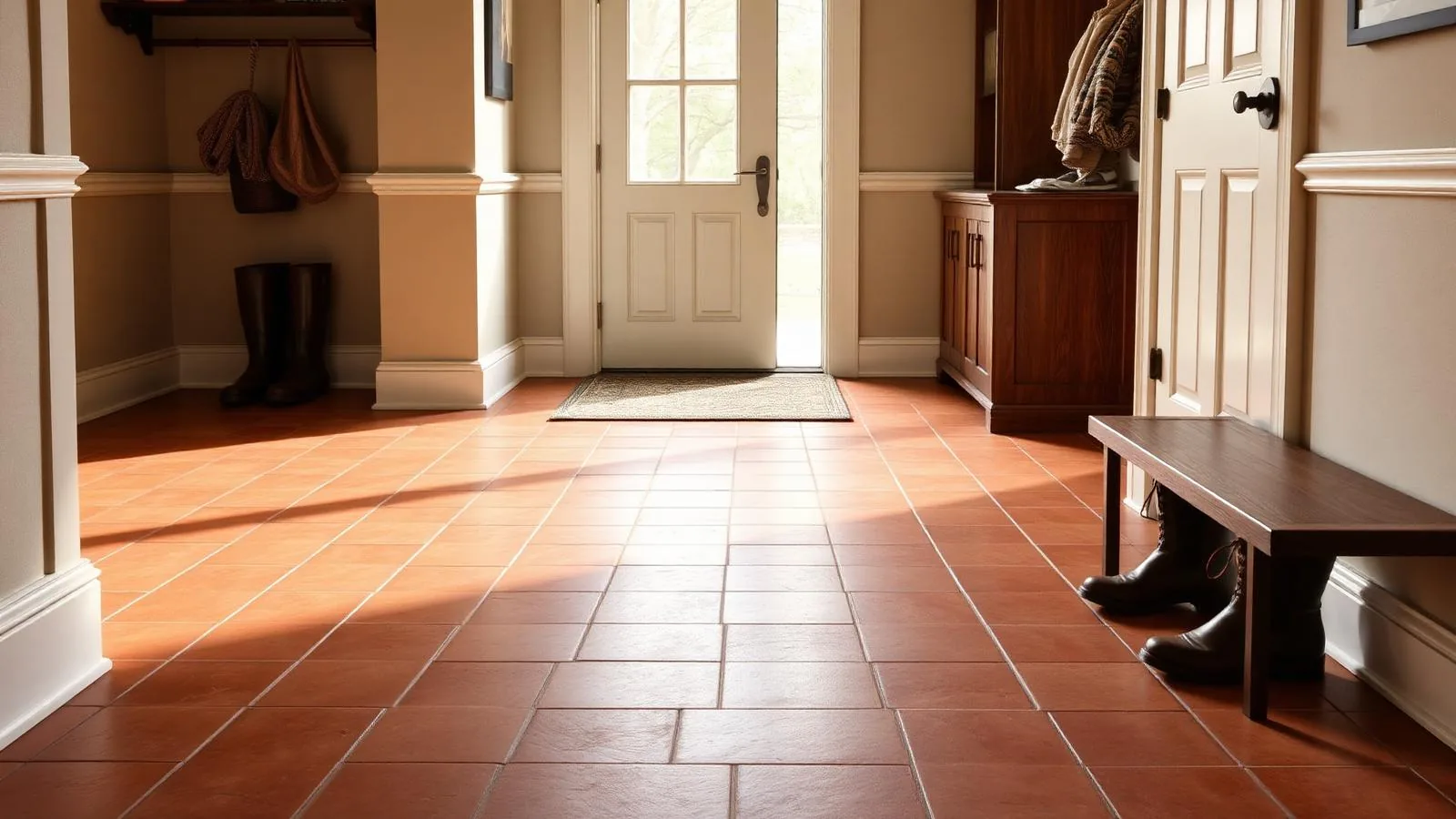
Unlike Saltillo, which is soft and handmade, quarry tile is machine pressed and much harder and less porous, closer in density to a low grade porcelain than to terracotta.
It is chosen specifically for its durability in high traffic, high abuse areas, which shapes the whole maintenance plan. The tile rarely gives out first, so the attention goes to sealer wear in walkways and to the grout between the tiles.
Dense And Machine Pressed
Far harder than Saltillo, pressed under pressure and fired hot rather than shaped by hand.
Low To Moderate Porosity
Absorbs slowly compared to terracotta, but unglazed quarry tile still needs a sealer to resist stains.
Reseal Every 2 To 3 Years
Traffic paths and entry thresholds set the schedule, not the quieter parts of the floor.
Built For High Traffic
Commercial grade durability is the reason it lands in mudrooms, entries, and working kitchens.
Know Which Quarry Finish You Have
Glazed and unglazed quarry tile look similar underfoot and need very different care. Identify the finish before deciding whether the tile itself needs sealing.
Most common, matte and slip resistant
Full surface penetrating sealer, reapplied on schedule
Dulling and absorbed stains where the sealer has worn
Less common residentially, low sheen glaze
Grout sealing only, similar to ceramic
Glaze scratches and grout wear rather than tile staining
Textured surface with grit additive
Stiff nylon brush agitation to reach the texture
Grime packing into the grit and holding grease
Standard flat finish for mudrooms and entries
Routine neutral or degreasing cleaner
Traffic lane dulling that shows plainly on a smooth face
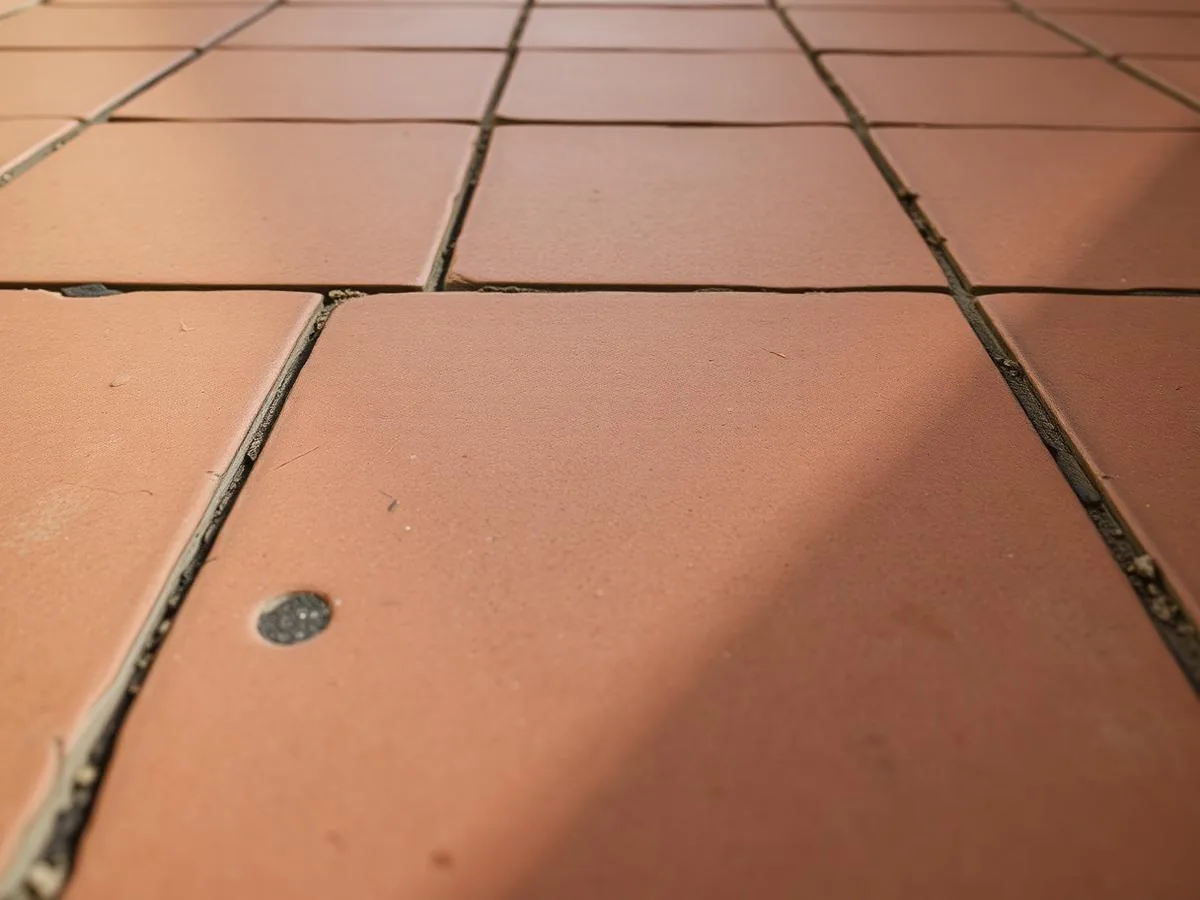
Catch It Early
Quarry tile fails quietly at the edges and in the joints. These are the signs worth catching early.
A Routine You Can Actually Keep
Grit control at the door and degreasing where oil tracks in. That is most of the job on quarry tile.
- Sweep or vacuum, especially in entryways and mudrooms where grit tracks in
- Damp mop with a pH neutral degreasing cleaner in kitchen and entry applications where oil or grease tracks in
- Inspect sealer wear in main traffic paths
- Reseal unglazed quarry tile on schedule
The Deep Clean Process
Five steps, in order. The last one matters most, because the grout tells you what the tile will not.
- 01
Sweep Or Vacuum Thoroughly
Quarry tile's texture holds grit at entryways more than smooth tile does.
- 02
Apply A pH Neutral Degreasing Cleaner
Entry and mudroom quarry tile often deals with tracked in oil and grime, not just dust.
- 03
Scrub Textured Finishes
Use a stiff nylon brush on textured or non slip surfaces so the bristles reach the grit profile.
- 04
Rinse Fully
Leftover degreaser film attracts soil again within days and makes the floor look dull.
- 05
Dry And Inspect Grout Lines
Grout typically wears faster than the tile, so it is the first thing to check once the floor is dry.
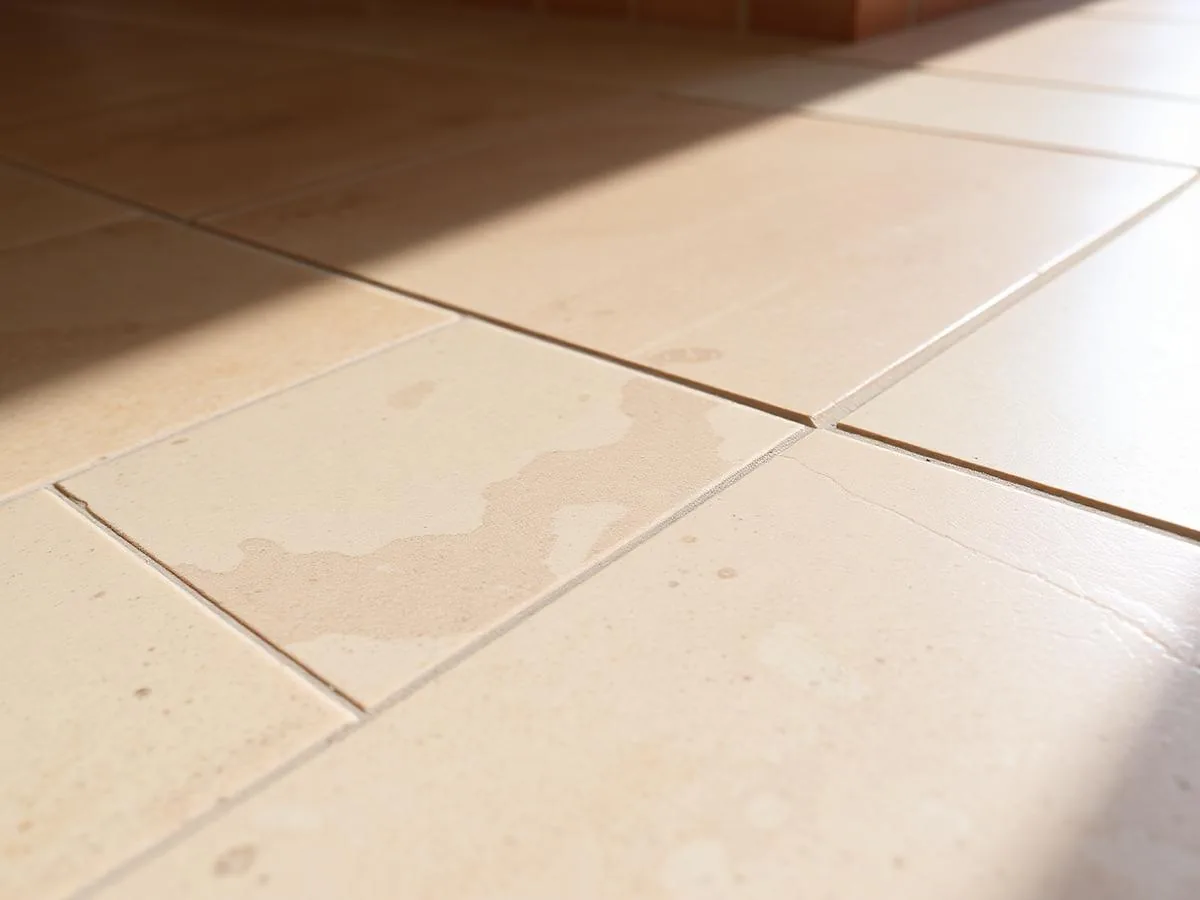
On Quarry Tile, The Grout Fails First
The tile itself is dense and hard wearing, so on quarry tile installations the grout, not the tile, is usually the first thing to fail.
That flips the usual maintenance priority. Plan around joint condition, repair crumbling grout before it spreads, and the tile will keep doing its job for decades.
- Inspect joints at every deep clean, not just the tile face
- Repair crumbling or missing grout before moisture reaches the setting bed
- Keep acidic products off grout lines entirely
- Reseal grout alongside unglazed tile in the same pass
Stain Chart
Entry and kitchen quarry tile sees grease more than anything else. Match the treatment to the source.
Grease and oil, common at entries and kitchens
Degreasing poultice, which may need repeat treatment on unglazed surfaces
Hard water and mineral deposits
Mild descaling cleaner, worked gently and rinsed fully
Rust
Poultice, never a wire brush
General tracked in grime
pH neutral cleaner with a stiff brush on textured finishes
Do This, Never That
Do
- Reseal unglazed quarry tile on schedule
- Use degreasing cleaners at entry points
- Address grout wear before it worsens
- Keep walk off mats at doors to catch grit
Don't
- Assuming glazed and unglazed quarry tile need the same care, since only unglazed needs sealing
- Acidic cleaners on grout lines
- Letting grit accumulate at entryways where it scratches the surface over time
- Wire brushes or metal tools on the tile face
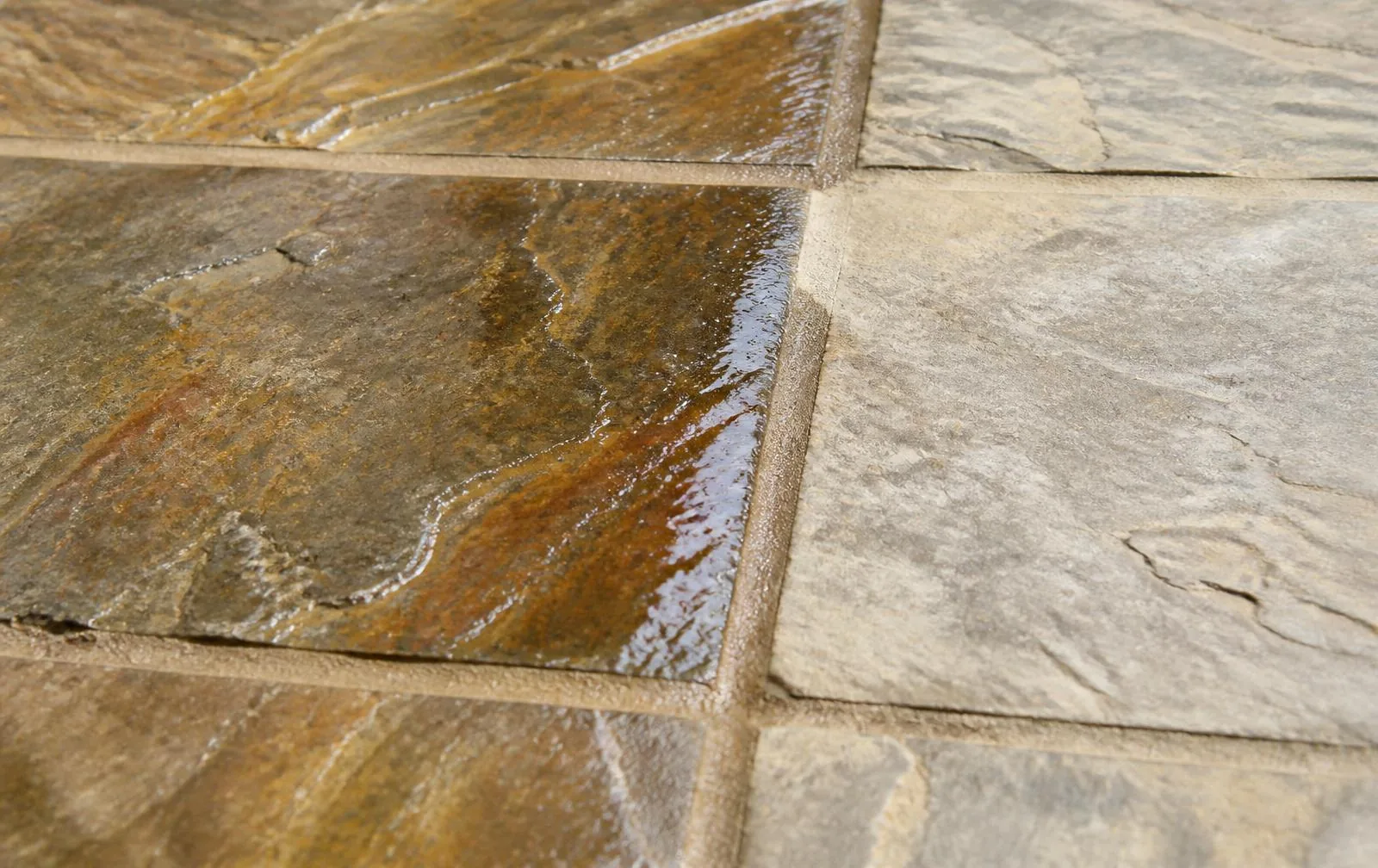
What Actually Gets Sealed
What gets sealed depends entirely on the finish. This is the one identification that changes the whole plan.
Unglazed Tile Surface
Unglazed quarry tile takes a full surface penetrating sealer across every tile.
Grout On Every Install
Glazed quarry tile only needs the grout sealed, similar to ceramic, since the glaze handles the rest.
Thresholds And Traffic Paths
Doorways and main walkways wear first and get extra attention at each reseal.
When To Call A Pro
Homeowner care handles maintenance. These four situations are restoration work, and waiting on them almost always raises the cost.
Sealer Wear Exposing Bare Tile
Absorbent tile in main walkways means the protective layer is gone where it is needed most.
Crumbling Or Missing Grout
Failure across multiple joints is a repair job, not something a cleaning visit resolves.
Chipped Tile At Entry Thresholds
Impact damage at doorways spreads if the loose edges are not addressed and replaced.
Set In Stains That Resist Poulticing
When repeat poultices do not lift a stain, the tile needs professional deep extraction.
Want A Read On Your Stone?
Free assessment across Scottsdale and the greater Phoenix Valley.
Quarry Tile Questions
Related Pages
Saltillo Tile Care
The soft, handmade cousin: extremely porous clay that depends entirely on its sealer.
Learn moreGrout Cleaning & Sealing
The weak point on every quarry tile floor: how to clean, seal, and repair grout joints.
Learn morePorcelain Tile Care
The denser comparison point: how porcelain wears and what it actually needs.
Learn moreReady when you are
RESTORE YOUR STONE.
GET A FREE BID.
Design-builds, restoration projects, specialty projects, and remodels across the Valley · Family-owned and locally operated.
- Mon–Fri · 7am to 4pm
- Sat · Closed
- Sun · Closed