

Complete Guide · Updated For Arizona Homes
Terrazzo Restoration
Most terrazzo in Phoenix is original to the house. The material is nearly indestructible, but decades of wax and worn sealer mean the answer is usually restoration rather than a cleaning routine.
What Terrazzo Actually Is
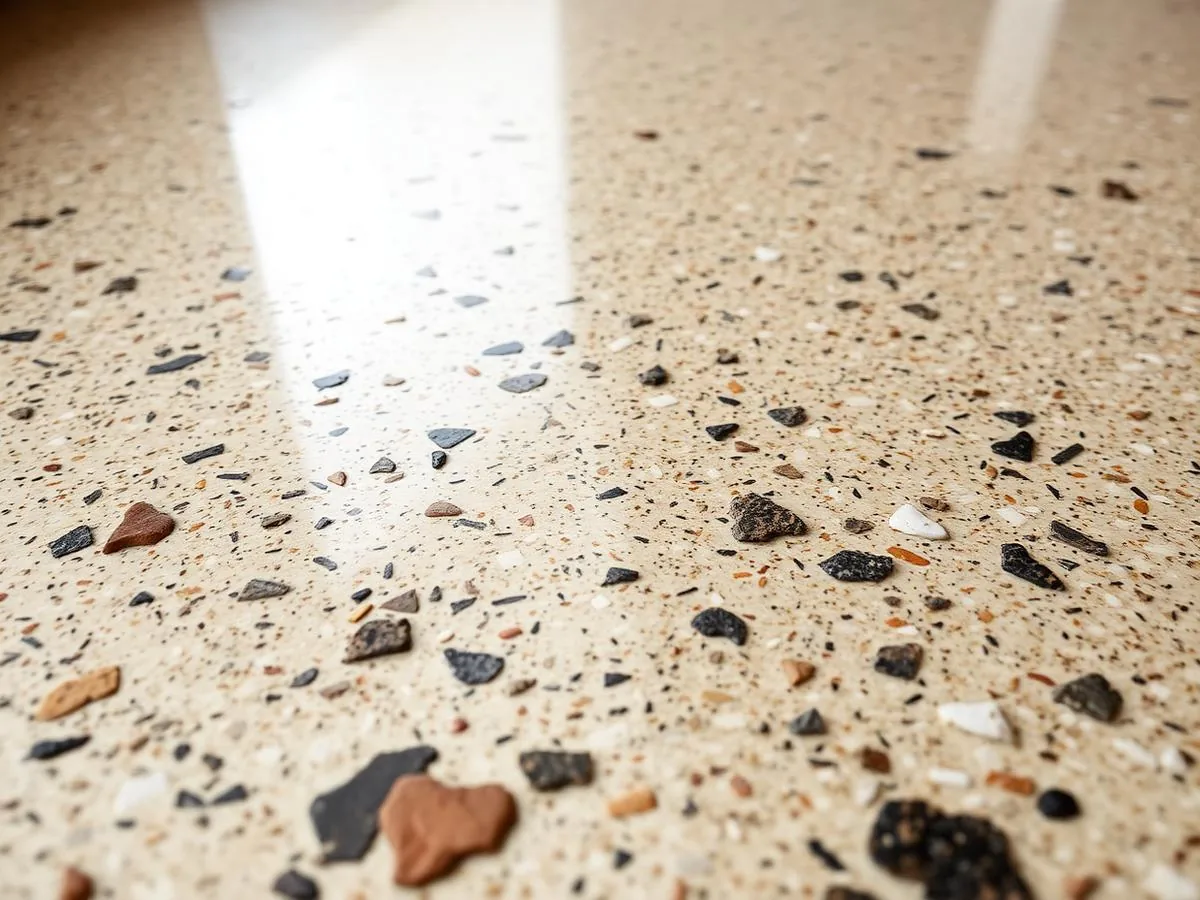
Terrazzo is a composite surface made of marble, granite, quartz, or glass chips set in a cement or epoxy binder and polished to a smooth, seamless finish.

It is common in mid century Phoenix homes and commercial buildings, and while the material itself is extremely durable, decades old terrazzo often needs professional restoration rather than routine cleaning.
That is why this guide leans toward restoration education more than daily maintenance. Most homeowners with terrazzo are dealing with an aged floor, not a new installation, and the fastest improvement comes from stripping and repolishing rather than from a better mop.
Composite Stone Surface
Marble, granite, quartz, or glass chips suspended in a binder and ground to a seamless finish.
Cement Based Or Epoxy Based
The binder decides porosity, sealer type, and how the floor responds to water.
Reseal Every 1 To 3 Years
Older cement based floors sit at the short end of that range, epoxy at the long end.
Often Original To The House
Much of the Valley's terrazzo dates to mid century construction and has never been restored.
Know Which Binder You Have
Care on terrazzo differs by binder more than by chip. Knowing whether the floor is cement based or epoxy based decides the sealer and how much water it tolerates.
Older, softer looking matrix, common pre 1970s
Breathable penetrating sealer, minimal water
More porous, so staining and efflorescence appear faster
Modern, denser, often brighter binder color
Typically a topical sealer, straightforward neutral cleaning
Surface scratching and dulling rather than absorption
Larger irregular stone chips, more texture
Brush agitation to reach the texture between chips
Grime holding in the texture on outdoor patio installations
Precast terrazzo tiles rather than poured in place
Neutral cleaning plus grout joint attention
Joint wear and lippage between individual tiles
Catch It Early
Aged terrazzo shows its history clearly. Most of these signs point to finish problems, not structural ones.
A Routine You Can Actually Keep
Neutral products and nothing that leaves a film. Terrazzo asks for very little between professional cycles.
- Dust mop or vacuum with a soft brush attachment
- Damp mop with a pH neutral cleaner, avoiding oil based soaps that build a dulling film over time
- Professional inspection of sealer condition and any chip loss
- Reseal on schedule, more frequently for older cement based floors
The Deep Clean Process
Five steps, in order. Everything here is about avoiding film and keeping water off a porous binder.
- 01
Dust Mop Or Vacuum First
Loose grit is what scratches a polished terrazzo surface during mopping.
- 02
Apply A Terrazzo Safe Neutral Cleaner
pH neutral only. Never oil soap or wax based products, which build film that has to be stripped later.
- 03
Limit Water On Cement Based Floors
Cement based terrazzo is more porous than epoxy based terrazzo and absorbs standing water.
- 04
Rinse And Dry Thoroughly
Residue left behind is the most common cause of the dull look on an otherwise sound floor.
- 05
Buff With A Soft Pad
Buffing maintains shine between professional polishing cycles without adding a coating.
It Is Rarely Damage, It Is Decades Of Buildup
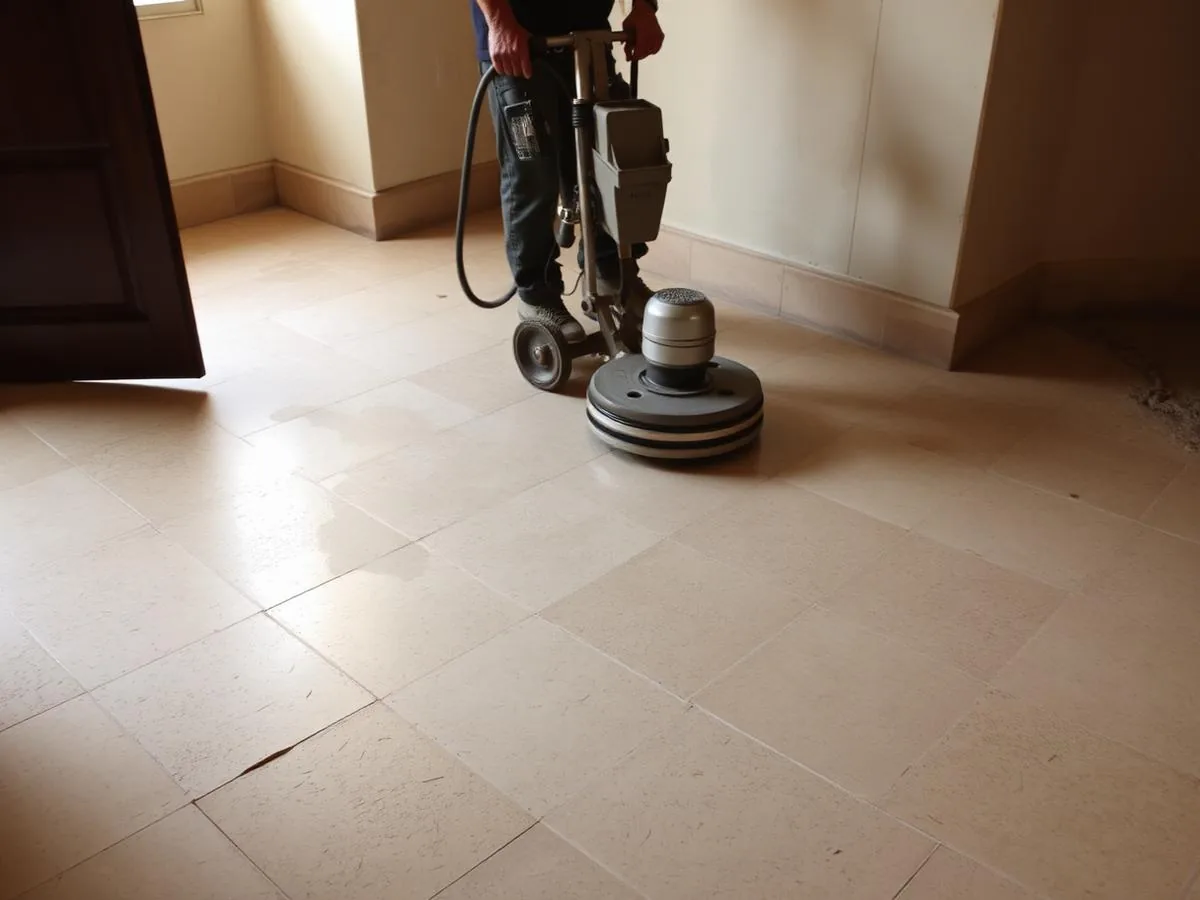
Most terrazzo problems homeowners bring to a restoration company are not new damage. They are decades of accumulated wax buildup and worn sealer on an otherwise structurally sound floor.
That is why full restoration, meaning strip, grind, repolish, and reseal, often transforms an aged floor dramatically. The stone underneath is usually in better condition than the surface suggests.
- Strip old wax rather than layering new product over it
- Judge the floor after stripping, not before
- Grinding and repolishing restores gloss without any coating
- Reseal to match the binder type once the surface is corrected
Stain Chart
Binder type changes how fast a treatment works. Porous cement based floors respond differently than dense epoxy.
Oil based stains
Poultice, which works more slowly on dense epoxy terrazzo than on porous cement based terrazzo
Rust from metal furniture legs
Poultice, applied directly and repeated if needed
Wax buildup and yellowing
Professional stripping, not a home cleaning product
Hard water spots
Mild, pH neutral descaling cleaner used sparingly
Do This, Never That
Do
- Use pH neutral cleaners exclusively
- Reseal on schedule based on the binder type
- Get old wax buildup professionally stripped
- Buff between professional polishing cycles
Don't
- Oil soap, which builds a dulling film over time
- Acidic cleaners on a cement based binder
- Wax based shine products that eventually require a full strip to reverse
- Layering new product over old buildup
What Actually Gets Sealed
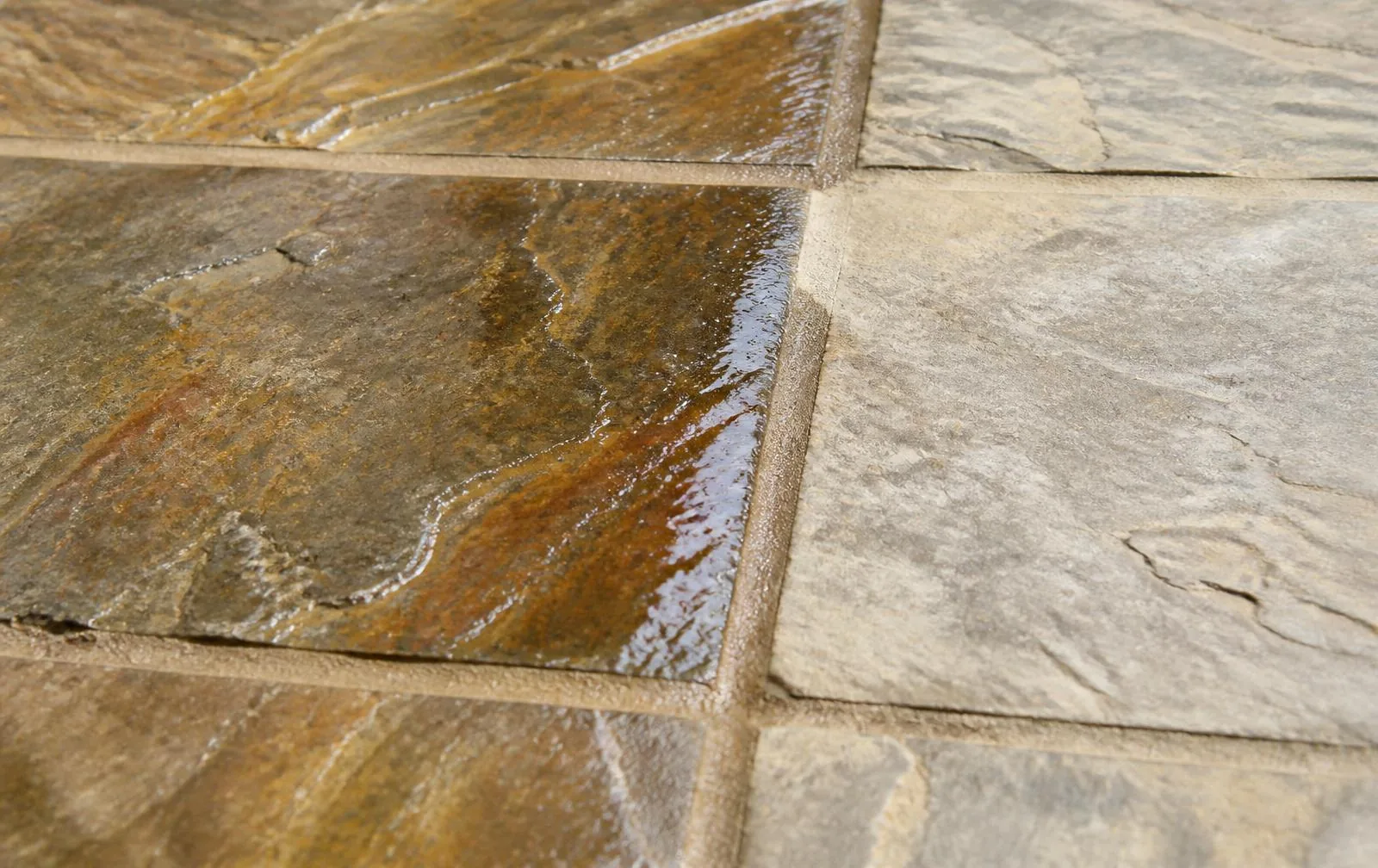
The full surface takes sealer, but which sealer depends entirely on the binder underneath the chips.
Cement Based Floors
A breathable penetrating sealer, so the more porous binder can still release moisture.
Epoxy Based Floors
Typically a topical sealer, since the base material is already far less porous.
Joints And Edges
Control joints and perimeter edges get worked carefully, since they collect residue and wear first.
When To Call A Pro
Homeowner care handles maintenance. These four situations are restoration work, and waiting on them almost always raises the cost.
Widespread Dulling Across The Floor
Dullness everywhere at once usually means sealer failure rather than localized wear.
Visible Chip Loss Or Pitting
Popped chips need filling and regrinding, which is not a maintenance task.
Yellowing From Old Wax
Aged wax has to be chemically stripped before any new finish can go down.
No Restoration In Over A Decade
Any terrazzo that has not been ground and repolished in ten years is due for assessment.
Want A Read On Your Stone?
Free assessment across Scottsdale and the greater Phoenix Valley.
Terrazzo Restoration Questions
Related Pages
Restoration Education
What grinding, honing, and repolishing actually do to an aged stone floor.
Learn moreNatural Stone Sealing Guides
When sealing actually matters, which products to use, and how often to reapply.
Learn moreGranite Care
Dense polished stone care: the water droplet test and realistic reseal intervals.
Learn moreReady when you are
RESTORE YOUR STONE.
GET A FREE BID.
Design-builds, restoration projects, specialty projects, and remodels across the Valley · Family-owned and locally operated.
- Mon–Fri · 7am to 4pm
- Sat · Closed
- Sun · Closed