

Master Reference · Updated For Arizona Homes
Natural Stone Sealing Guides
The master sealing reference for every material in this Resource Center: which sealer type belongs on which surface, and how often it actually needs to be reapplied in Arizona.
One Reference For Every Surface
Sealing is the single most important maintenance task across every material in this Resource Center, but the right sealer, and how often to apply it, varies enormously by material.
This page is the master reference. Use it to understand the two main sealer types and to look up reseal frequency by material, then visit the full material guide for complete application steps.
Sealer Type & Reseal Frequency
Filter by material to see what gets sealed, with what, and on what interval.
| Material | Sealer Type | Reseal Frequency | Notes |
|---|---|---|---|
| Ceramic (glazed face) | Grout only, penetrating | 1 to 2 years | The glazed face itself does not need sealing |
| Porcelain | Grout only (rarely the face, except polished) | 1 to 2 years (grout) | Near zero absorption means minimal need |
| Travertine | Full surface, penetrating | 9 to 12 months exterior / 12 to 18 months interior | Highest sealing priority on this list |
| Marble | Full surface, penetrating | 6 to 12 months | More frequent on high traffic floors |
| Granite | Full surface, penetrating | 1 to 2 years (test dependent) | Frequency varies significantly by slab porosity |
| Slate | Full surface, breathable penetrating only | 2 to 3 years | Never use a topical or film sealer |
| Limestone | Full surface, penetrating | 12 to 18 months | Similar profile to travertine |
| Saltillo | Full surface, penetrating or topical | 1 year (penetrating) / 2 to 4 years (topical) | Sealer is functionally required, not optional |
| Quarry Tile (unglazed) | Full surface, penetrating | 2 to 3 years | Glazed quarry only needs the grout sealed |
| Terrazzo (cement based) | Full surface, breathable penetrating | 1 to 2 years | Epoxy based terrazzo needs sealing less often |
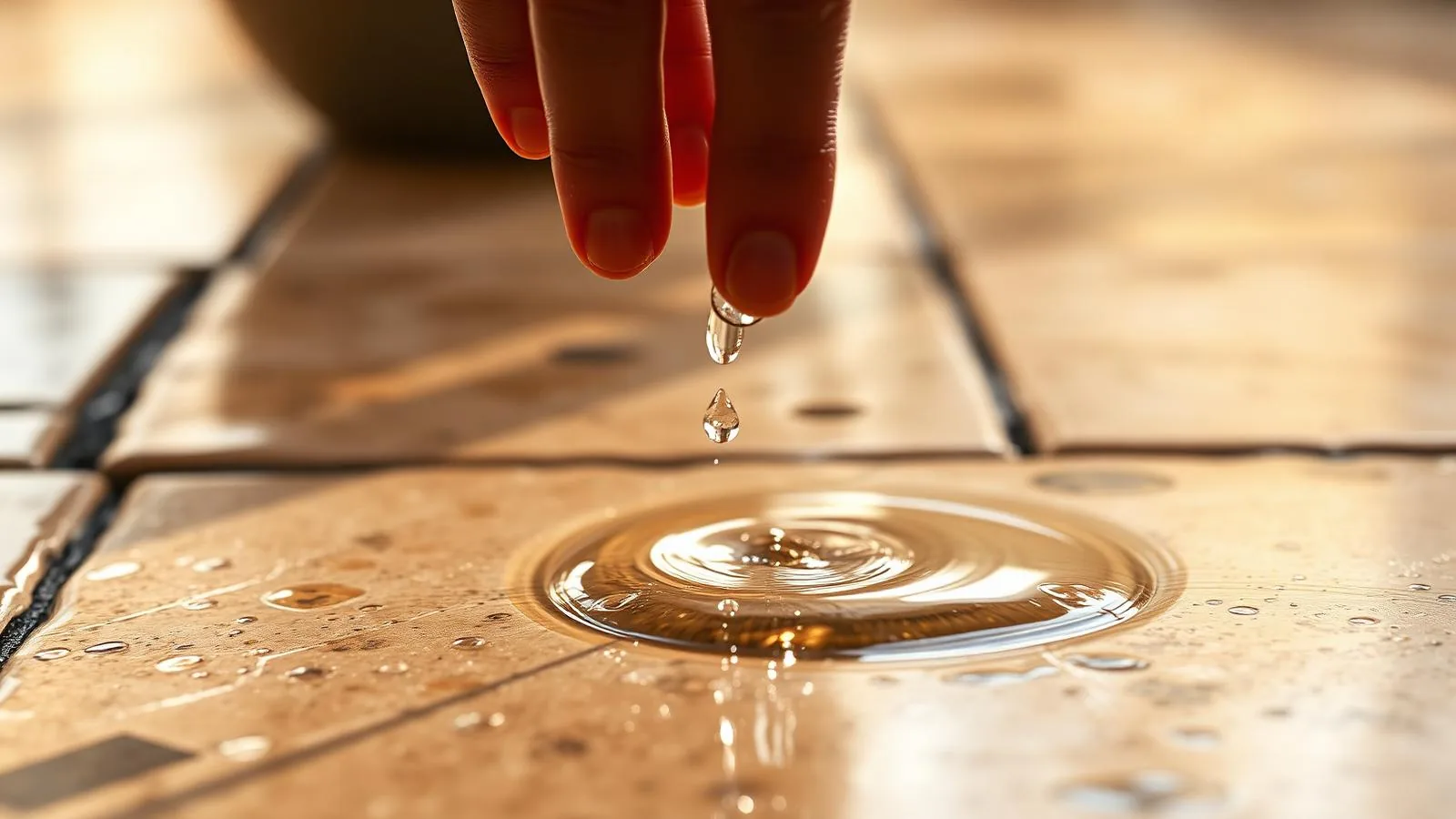
The Water Droplet Test
The water droplet test works across nearly every material on this list. Place a few drops of water on the surface. If it beads up, the sealer is still working. If it darkens or absorbs within a few minutes, it is time to reseal.
How It Works
Three different products get called a sealer. They do very different jobs, and matching the type to the material is most of the decision.
Penetrating (Impregnating) Sealers
These soak into the stone's pores and block moisture and stains from within, while leaving the natural surface texture and breathability intact. This is the right choice for the majority of natural stone on this list.
Topical (Film Forming) Sealers
These sit on top of the surface as a coating, offering more visible sheen but no breathability. They are appropriate mainly for Saltillo's traditional wet look finish, and the wrong choice for slate or any stone prone to trapping moisture.
Grout Sealers
A separate category entirely. Even tile faces that never need sealing, like ceramic and porcelain, almost always have grout that does.
Do This, Never That
Do
- Test with the water droplet method before assuming a reseal schedule
- Match sealer type to material, never guess
- Reseal grout even on tile that does not need face sealing
Don't
- Use a topical sealer on slate or other moisture sensitive stone
- Skip resealing because a floor still looks fine, since many failures are not visible until staining occurs
- Assume all natural stone follows the same schedule
Natural Stone Sealing Guides Questions
Full Care Guides
Every material and grout guide in the Resource Center, with the complete step by step care detail behind the summaries above.
Ceramic Tile Care
Glazed face, porous grout: the routine that keeps it looking new.
Read GuidePorcelain Tile Care
Near-zero absorption, but grout and polished faces still need care.
Read GuideTravertine Care
Filled vs unfilled, reseal intervals, and Arizona pool deck wear.
Read GuideMarble Care
Why etching, not staining, is marble's real problem.
Read GuideGranite Care
The water droplet test and slab-by-slab reseal frequency.
Read GuideSlate Care
Cleft texture, delamination, and breathable sealers only.
Read GuideLimestone Care
Soft, acid sensitive, and dependent on a working sealer.
Read GuideSaltillo Tile Care
Unfired clay that treats sealer as a requirement, not an option.
Read GuideQuarry Tile Care
Dense unglazed clay tile and the grout that fails around it.
Read GuideTerrazzo Restoration
Composite stone, wax buildup, and true restoration polishing.
Read GuidePool Deck Stone Care
Chlorine, UV, and the 9 to 12 month reseal window.
Read GuideGrout Cleaning & Sealing
Porosity, reseal cycles, and when grout has failed beyond cleaning.
Read GuideShower Restoration
Moisture exposure, restoration vs retile, and project phases.
Read Guide
Related Pages
Stain Removal Guides
A lookup across stain type and material, including how to tell a stain from etching before you treat anything.
Learn moreMaintenance Schedules
Every weekly, monthly, and yearly routine on this site, consolidated into one filterable master schedule.
Learn moreCeramic Tile Care
Placeholder overview. Real content for this guide is being written by the field team and will replace this text.
Learn moreReady when you are
RESTORE YOUR STONE.
GET A FREE BID.
Design-builds, restoration projects, specialty projects, and remodels across the Valley · Family-owned and locally operated.
- Mon–Fri · 7am to 4pm
- Sat · Closed
- Sun · Closed