

Complete Guide · Updated For Arizona Homes
Marble Care
Marble is beautiful and unforgiving. A splash of wine or lemon juice can etch it in seconds, and etching is physical damage to the stone, not a stain sitting on top of it.
What Marble Actually Is
Marble is a metamorphic stone, almost entirely calcium carbonate, prized for its veining and polish, and highly reactive to acid.
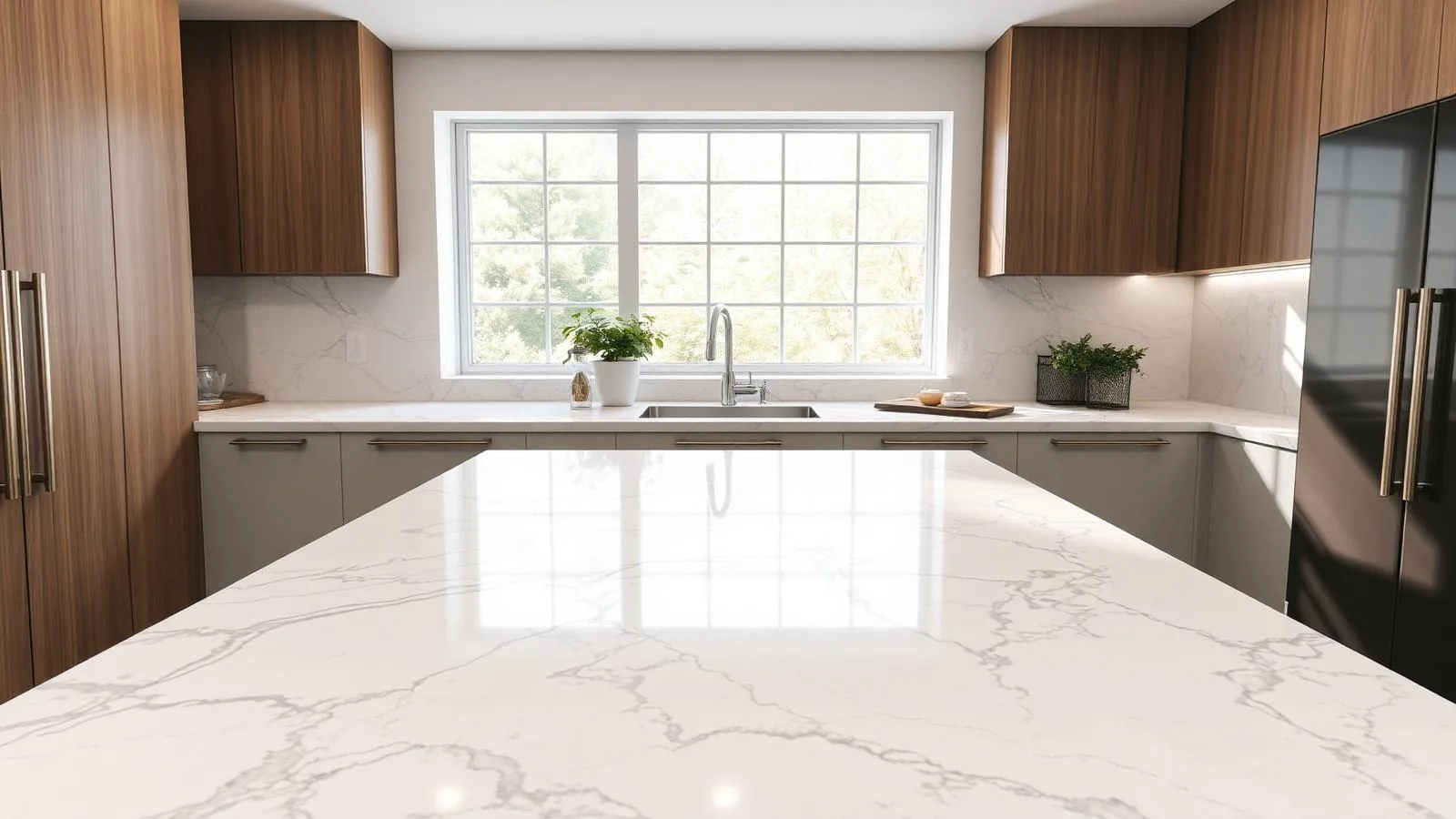
A splash of wine, coffee, or lemon juice can etch the surface in seconds, leaving a dull spot no amount of cleaning removes. That is because etching is physical damage to the stone's surface, not a stain sitting on top of it.
In Phoenix, marble shows up most often on countertops and interior floors, and rarely on exterior surfaces because of heat sensitivity and cost. Everything on this page comes back to one idea: protect the polish.
Acid Reactive
Etches easily. Wine, citrus, coffee, and tomato all leave a dull mark on contact, not a stain you can scrub off.
Softer Than Granite
Scratches more easily, so abrasive pads and unprotected cutting are off the table.
Reseal Every 6 To 12 Months
High traffic floors sit at the short end of that range. Lower traffic counters can stretch closer to a year.
Best Suited To Indoor Use
Heat sensitivity and cost keep marble inside. Countertops and interior floors are where it belongs.
Know Which Marble Finish You Have
The finish decides how visible etching is and how careful you need to be. Polished marble shows every mark, honed marble forgives more.
Glossy, mirror like reflection
The most careful acid avoidance of any finish
Etching, which shows most visibly here
Matte, soft surface
Standard pH neutral cleaning, popular for kitchen counters
Hides etching better, but still etches
Textured, rustic edges
Soft brush in the texture, common in showers and backsplashes
Soap film building up in the texture
Subtle texture
Wipe in the direction of the finish
Softens the look of scratches over time, but does not prevent them
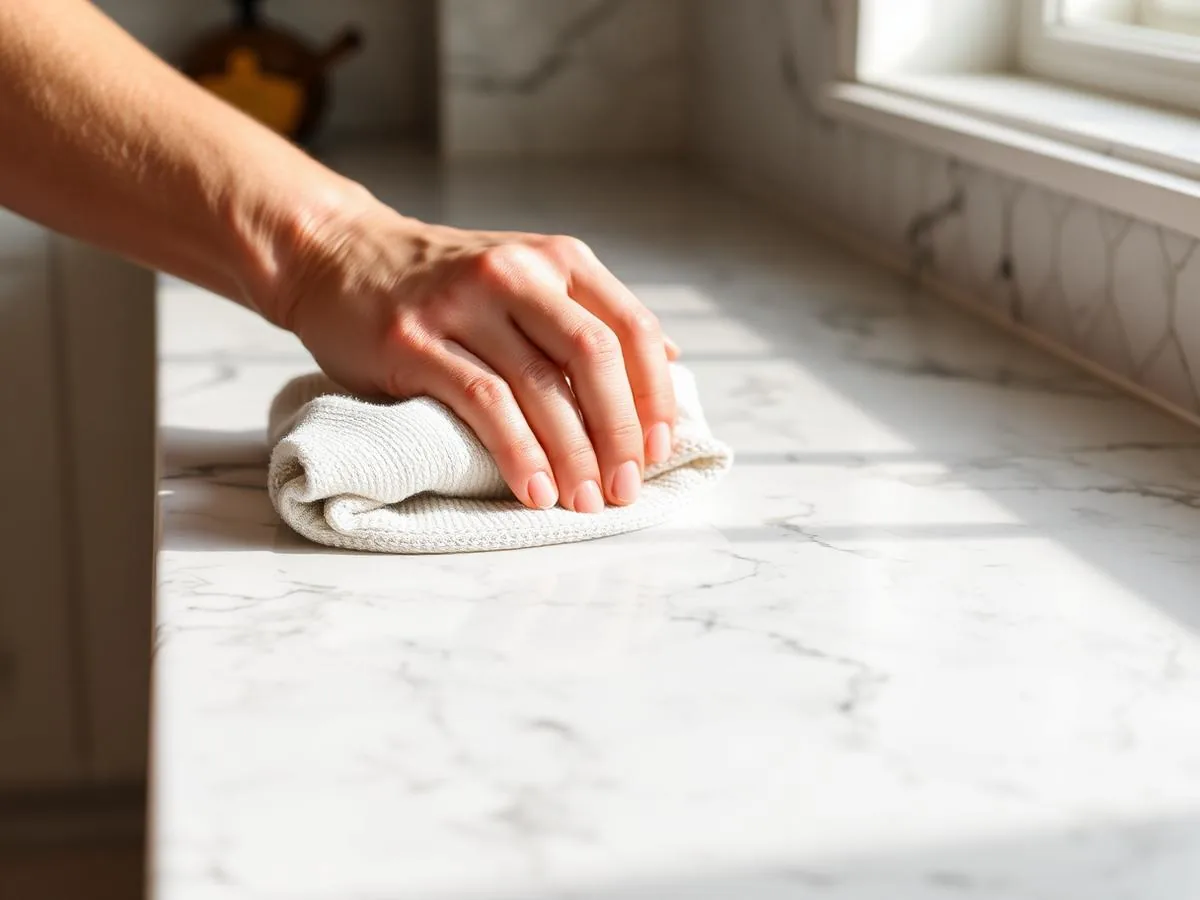
Catch It Early
Marble degrades in ways that look like dirt but are not. Learning to tell etching from staining saves a lot of wasted scrubbing.
A Routine You Can Actually Keep
Marble rewards speed. Wiping an acidic spill in the first few seconds is worth more than any product on the shelf.
- Dry dust or vacuum floors to keep grit off the polish
- Wipe counters immediately after any acidic spill, including wine, citrus, tomato, and coffee
- Buff with a dry microfiber cloth to maintain shine
- Check the sealer with a water droplet test. If water absorbs within a few minutes instead of beading, it is time to reseal
- Professional resealing
- Professional re-polishing if etching has accumulated across the surface
The Deep Clean Process
Five steps, in order. The buff dry at the end is what prevents the water spotting people blame on their cleaner.
- 01
Dry Dust First, Always
Grit dragged across polished marble is what puts the fine scratches in it, not the mopping itself.
- 02
Use Marble Specific Cleaner
pH neutral and verified for marble. Generic stone cleaner that is not confirmed pH neutral is a gamble on a soft stone.
- 03
Wipe With The Finish
On honed and brushed marble, wipe in the direction of the finish so the surface reads evenly.
- 04
Rinse With Clean Water
Cleaner residue on marble dulls the reflection and attracts more soil on the next pass.
- 05
Buff Dry Immediately
Standing water leaves rings and spots on marble faster than on any other stone here.
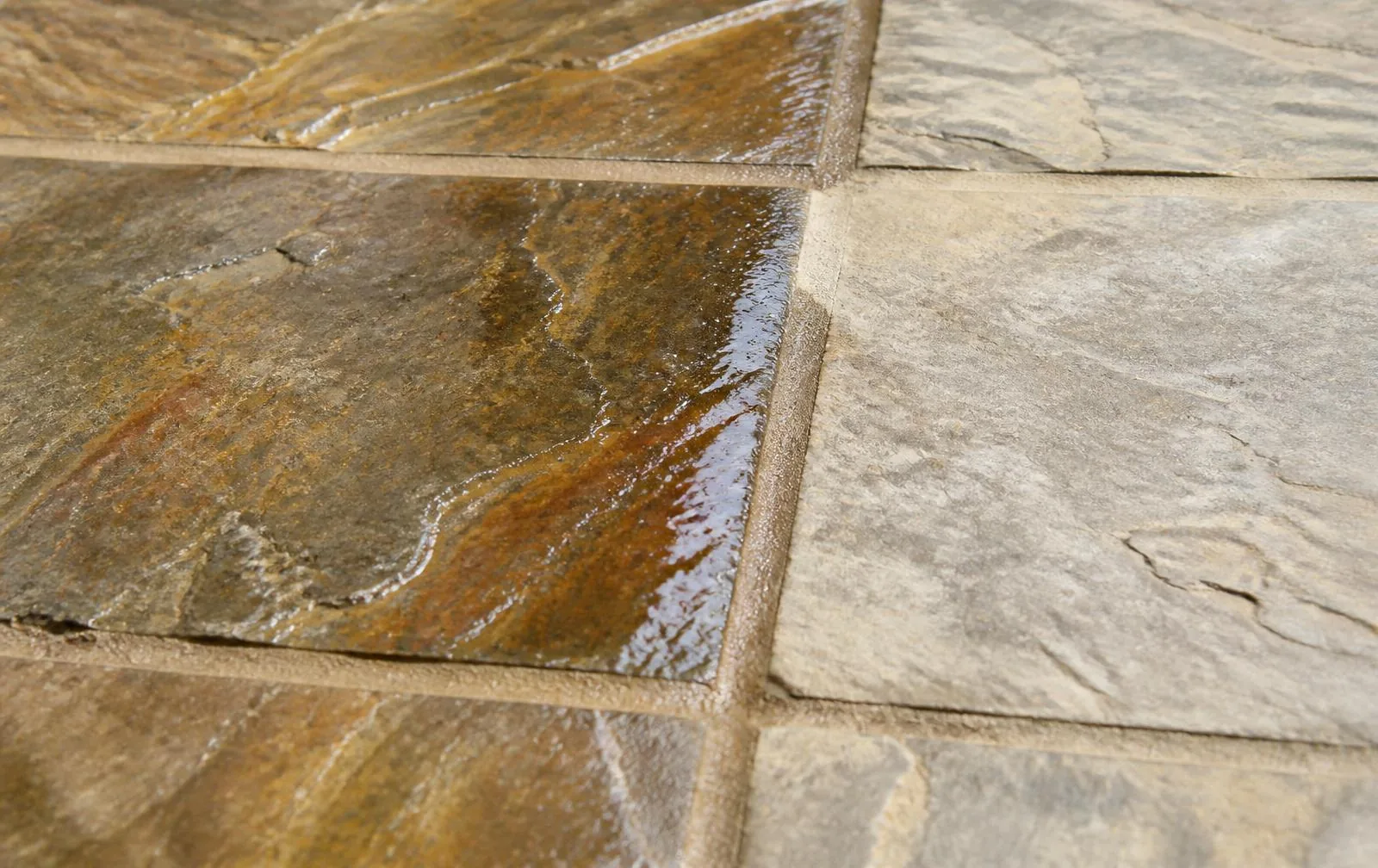
Etching, Not Staining, Is Where Marble Fails
Etching, not staining, is marble's real vulnerability, and it is why kitchen marble counters near acidic foods need more vigilance than any other surface on this list.
A stain sits on top of the stone and can be drawn out. An etch is a small crater in the polish itself, and only refinishing puts it back. Knowing which one you are looking at decides the whole approach.
- Treat wine, citrus, and coffee marks as polishing problems, not stains
- Keep a cutting board and coasters in permanent rotation
- Reseal on schedule, which slows staining but does not stop etching
- Call for re-polishing once etch marks appear in more than a spot or two
Stain Chart
Read this chart carefully: the top row is not a stain at all. Wine, coffee, and citrus etch marble, so they are a polishing issue rather than a stain issue.
Wine, coffee, citrus (etching, not staining)
Professional re-polishing for visible etching. Light etching can respond to a marble polishing powder used at home, carefully and sparingly
Oil based stains
Baking soda poultice, left covered long enough to draw the oil back out of the stone
Hard water spots
Marble safe mineral remover, applied briefly and rinsed fast so it does not sit and etch
Rust
Specialty poultice only. Never an acidic rust remover, which will etch the marble around the stain
Do This, Never That
Do
- Wipe acidic spills immediately, within seconds if you can
- Use marble specific, verified pH neutral cleaners
- Reseal on schedule, more often on high traffic floors
- Buff dry after every wet clean
Don't
- Vinegar, lemon based cleaners, or bleach, ever
- Abrasive scrub pads on any marble finish
- Letting citrus or wine sit on the surface even briefly
- Wax based polish products, which yellow over time
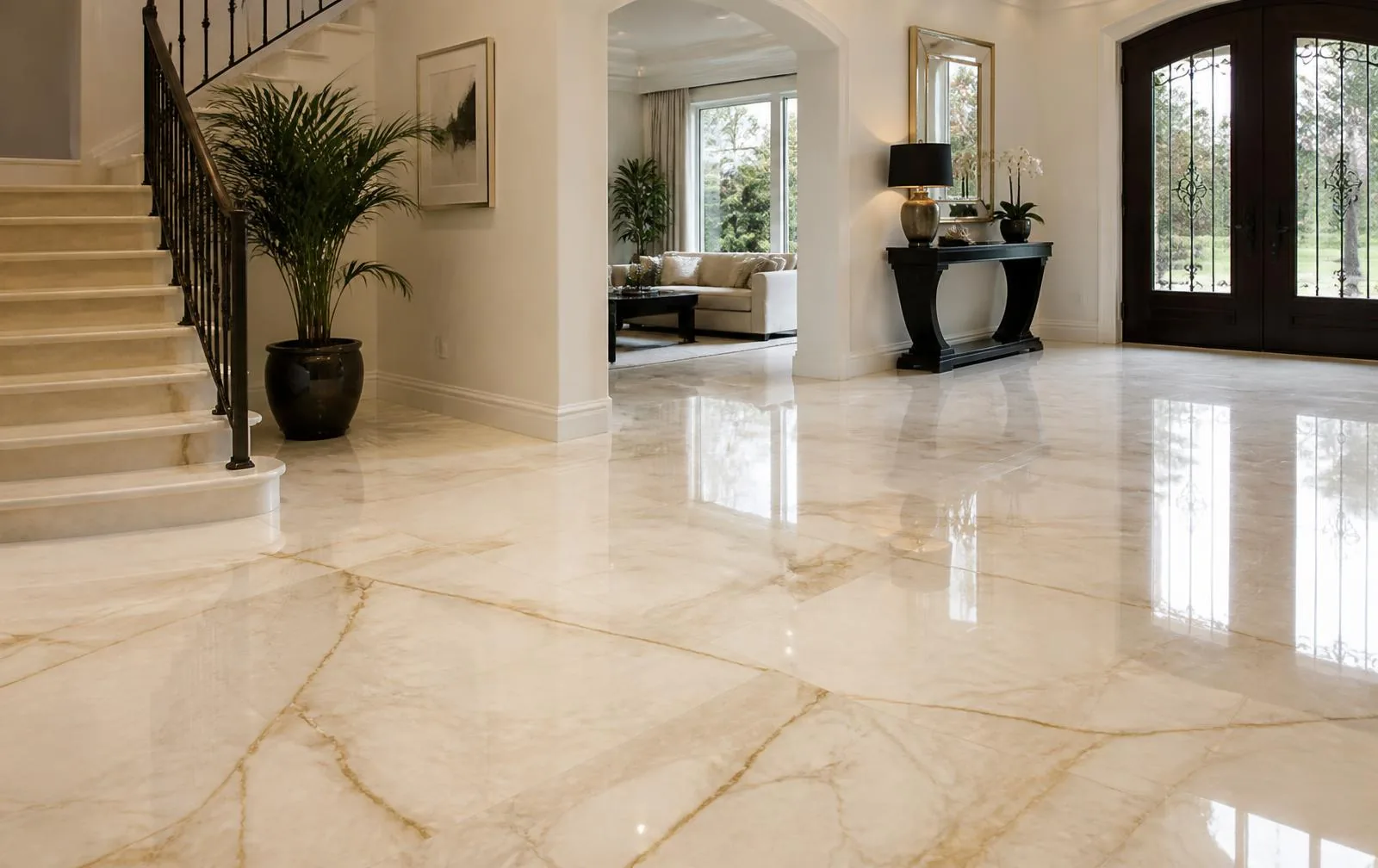
What Actually Gets Sealed
Full surface penetrating sealer, reapplied more frequently on high traffic floors than on lower traffic countertops.
High Traffic Floors
The short end of the six to twelve month window. Foot traffic wears sealer off the walking paths first.
Countertops
Closer to the twelve month end, but test with a water droplet near the sink where use concentrates.
What Sealer Does Not Do
Sealer slows staining. It does not prevent etching, because etching is physical damage rather than absorption.
When To Call A Pro
Homeowner care handles maintenance. These four situations are restoration work, and waiting on them almost always raises the cost.
Etching Across Multiple Spots
Once etch marks show up in several places, spot treatment stops working and the surface needs refinishing as a whole.
Scratches You Can Feel
If a fingernail catches in a scratch, it is too deep for polishing powder and needs honing.
Yellowing That Will Not Clean
Usually built up wax or old topical product that has to be stripped before the stone can be refinished.
Years Since The Last Polish
A floor that has not been professionally re-polished in several years has lost reflectivity evenly, which reads as dull rather than damaged.
Want A Read On Your Stone?
Free assessment across Scottsdale and the greater Phoenix Valley.
Marble Questions
Related Pages
Granite Care
The forgiving alternative: dense, heat resistant, and driven by the water droplet test.
Learn moreNatural Stone Sealing Guides
When sealing actually matters, which products to use, and how often to reapply.
Learn moreStain Removal Guides
Poultices, enzymatic treatments, and what to never put on a soft stone.
Learn moreReady when you are
RESTORE YOUR STONE.
GET A FREE BID.
Design-builds, restoration projects, specialty projects, and remodels across the Valley · Family-owned and locally operated.
- Mon–Fri · 7am to 4pm
- Sat · Closed
- Sun · Closed