

Complete Guide · Updated For Arizona Homes
Limestone Care
Limestone is soft, porous, and acid reactive. It rewards a strict routine and punishes a missed reseal faster than any other interior stone we maintain.
What Limestone Actually Is
Limestone is a sedimentary stone, softer and more porous than granite or slate, prized for its soft, uniform, matte look.

It is essentially a close cousin to travertine chemically, since both are calcium carbonate, which means it shares the same core vulnerability: acid sensitivity and high absorption.
In Phoenix, limestone shows up most often on interior floors, fireplace surrounds, and some patio applications, though it needs more protection outdoors than travertine because it is generally more porous.
High Porosity
Limestone absorbs quickly, so spills and standing water become stains faster than on denser stone.
Acid Reactive
It etches like marble. Wine, citrus, and vinegar leave dull spots on contact, not stains.
Reseal Every 12 To 18 Months
A firmer schedule than granite or slate, driven by the stone's absorption rate.
Protect From Sun And Water
Best kept out of direct sun and away from standing water, especially on patio installations.
Know Which Limestone Finish You Have
The finish decides how visible etching and wear will be. Honed limestone hides a great deal that polished limestone puts on display.
Matte, the most common finish
pH neutral cleaner, prompt spill wiping
Traffic path wear before it becomes visible pitting
Glossy, rare on limestone because the stone is soft
Strictly neutral products, no abrasives
Etching and wear, which show quickly on gloss
Textured, rustic, old world floors
Soft brush agitation in the texture
Grit collecting in the softened edges
Subtle texture that softens scratch visibility
Routine neutral cleaning
Uneven sheen where sealer wears first
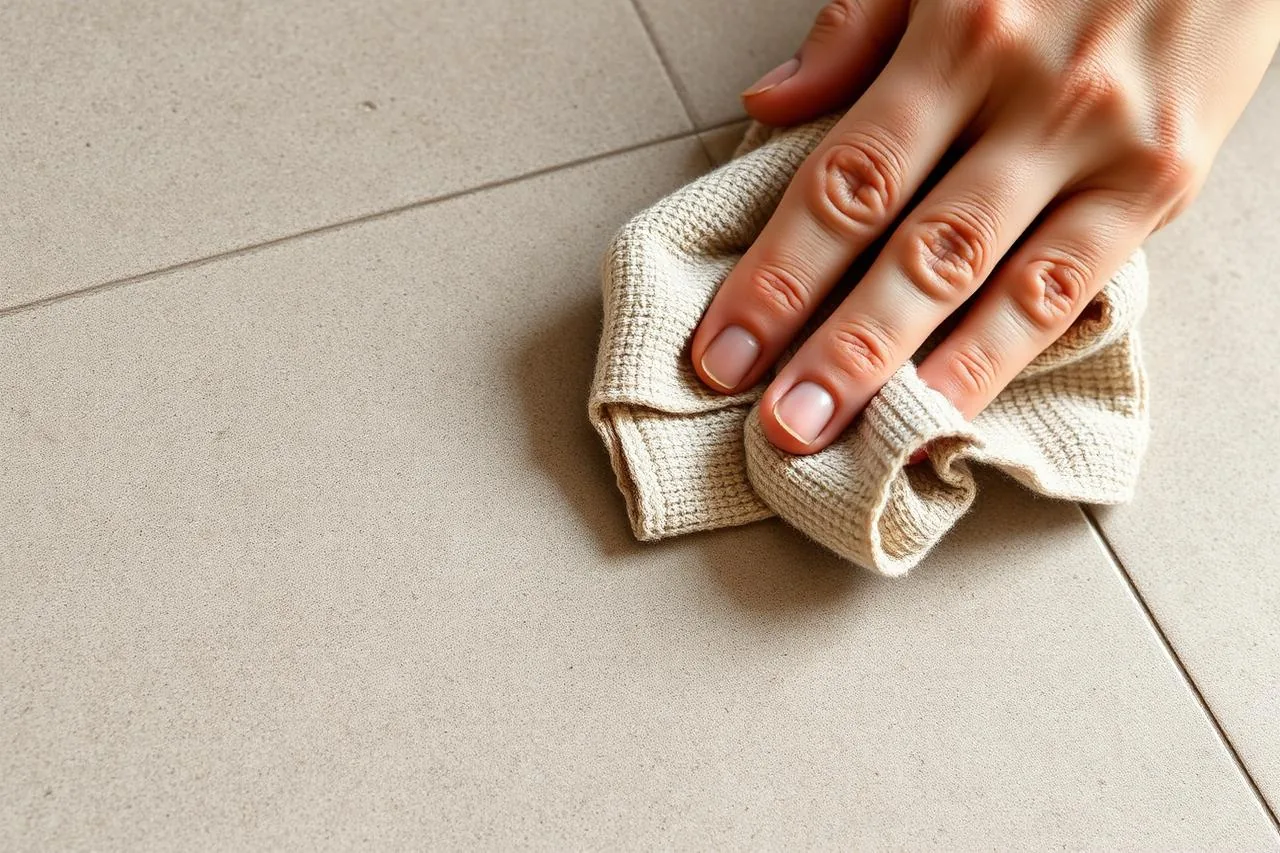
Catch It Early
Limestone signals wear early. Catching these before the surface goes granular keeps the fix to a reseal rather than a refinish.
A Routine You Can Actually Keep
The routine is short but strict. Speed on spills and restraint with water are what protect a limestone floor.
- Dry dust mop
- Wipe any acidic spill immediately, before it has time to etch
- Inspect high traffic areas for granular surface wear
- Reseal with a penetrating sealer
- Professional inspection if the floor sees heavy daily foot traffic
The Deep Clean Process
Five steps, in order. Notice how little water is involved, because that is the point on a stone this absorbent.
- 01
Dry Dust First, Always
Limestone scratches more easily than most stones on this list, so grit comes off before anything wet goes down.
- 02
Use A Limestone Safe Cleaner
pH neutral, limestone specific products exclusively. Nothing acidic ever touches this stone.
- 03
Avoid Excess Water
High porosity means standing water risks soaking in before it can be wiped away.
- 04
Rinse Minimally, Dry Promptly
A light rinse and an immediate dry keeps moisture from working into the stone.
- 05
Buff Dry With A Soft Cloth
Buffing evens the finish and reveals any dull spots that need attention.
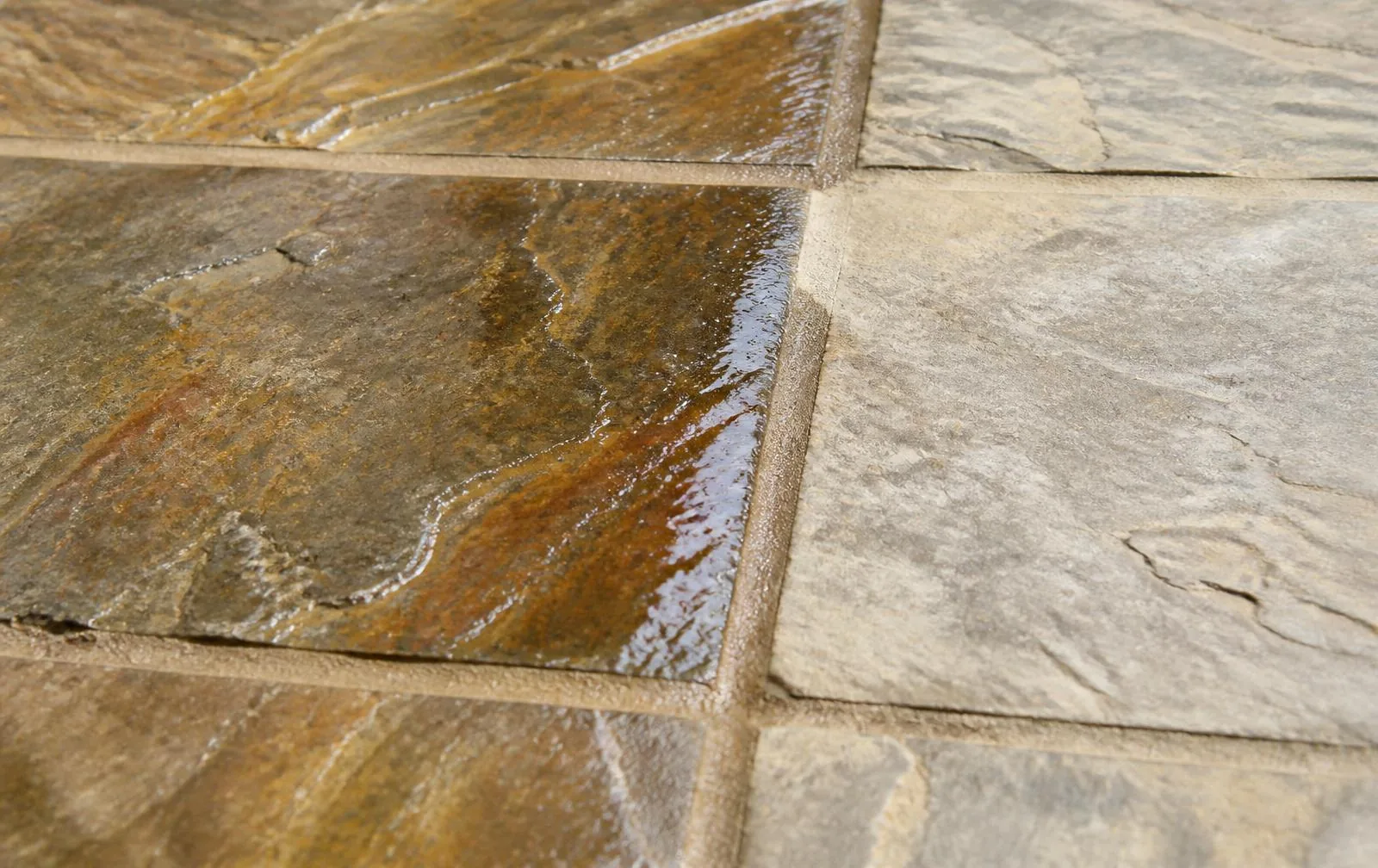
Softness Is Where Limestone Fails
Softness is limestone's defining trait and its main vulnerability. It wears from ordinary foot traffic over time in a way granite and slate simply do not.
That is why resealing on schedule matters more here than almost anywhere else. A working sealer is the layer taking the abrasion, and once it is gone the stone itself starts giving up material.
- Reseal every twelve to eighteen months without exception
- Watch walkways and entries, where wear starts first
- Use mats at doors to keep grit off the surface
- Never drag furniture across an unprotected limestone floor
Stain Chart
Match the problem to the method, and be clear about which problems are not stains at all.
Etching from wine, citrus, or vinegar
This is physical damage, not a stain. Treat with light honing or polishing rather than any cleaning product
Oil based stains
Poultice, applied thick and left covered to draw the oil back out of the stone
Hard water spots
Limestone safe mineral remover, brief contact time only
Organic staining
Enzymatic poultice, which breaks the organic material down rather than bleaching it
Do This, Never That
Do
- Wipe spills immediately, especially anything acidic
- Use only limestone specific pH neutral products
- Reseal on schedule without exception
- Dry dust before every wet clean
Don't
- Vinegar, citrus, or any acidic cleaner, ever
- Standing water when mopping
- High heels or dragged furniture on unprotected limestone
- Abrasive pads or scouring powders
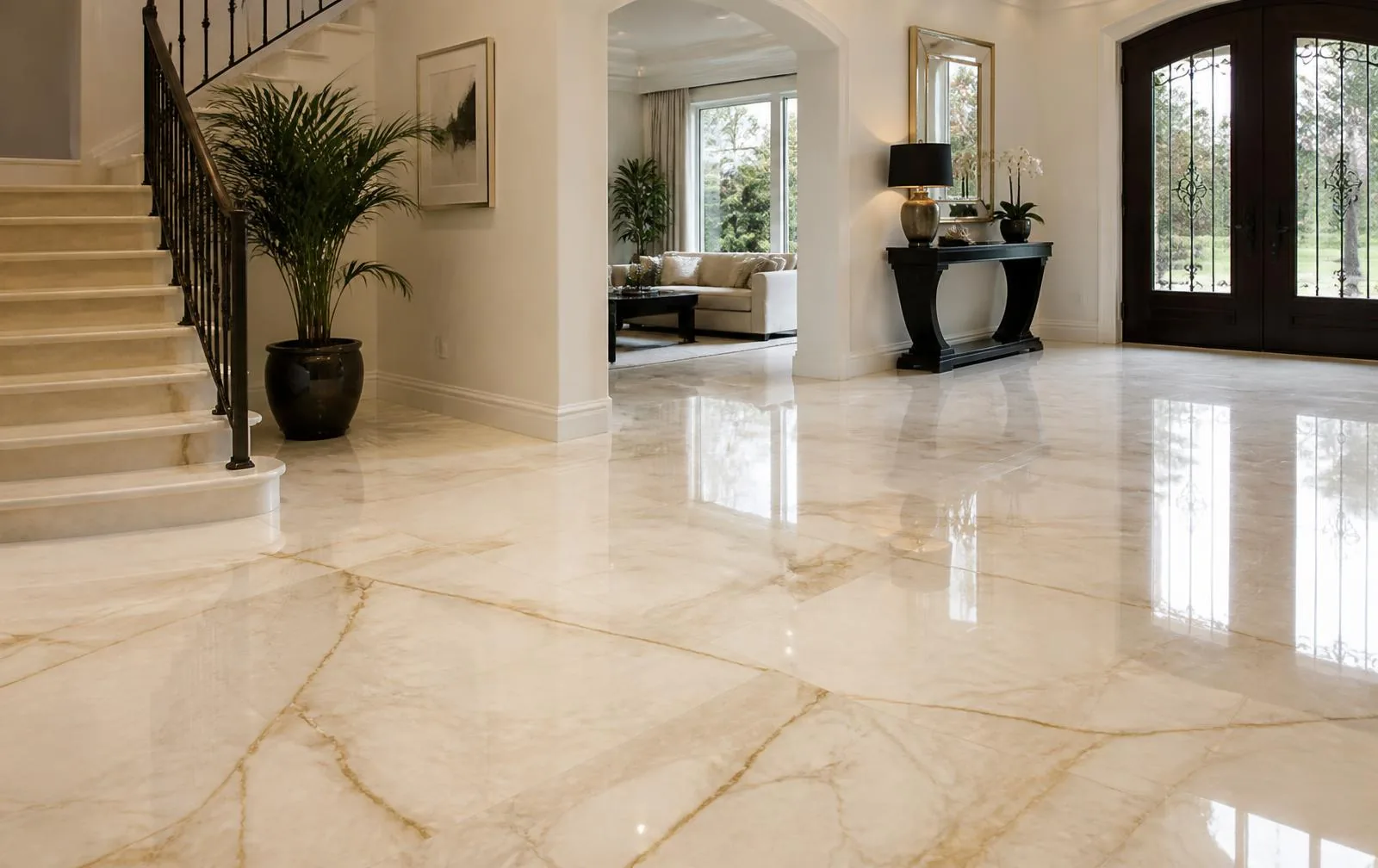
What Actually Gets Sealed
The full surface takes a penetrating sealer, on a firmer schedule than granite or slate given limestone's higher porosity.
The Full Stone Surface
Every tile absorbs, so the whole field gets sealed evenly rather than spot treated.
Grout And Joints
Joints seal alongside the stone, since grout on a limestone floor absorbs just as readily.
Edges And Transitions
Corners and edges crumble first, so they get inspected and sealed with extra care.
When To Call A Pro
Homeowner care handles maintenance. These four situations are restoration work, and waiting on them almost always raises the cost.
Visible Etching Across Multiple Areas
Widespread etching is refinishing work, since honing is the only thing that removes it.
Granular Wear Or Pitting In Walkways
Once the surface goes granular, the stone is losing material and needs professional restoration.
Edges Crumbling Or Chipping
Crumbling edges are repaired with matched material, not filled with caulk.
Darkening That Does Not Resolve
If the surface is fully dry and still dark, moisture is trapped under a failed sealer.
Want A Read On Your Stone?
Free assessment across Scottsdale and the greater Phoenix Valley.
Limestone Questions
Related Pages
Travertine Care
Limestone's chemical cousin: same acid sensitivity, different structure and schedule.
Learn moreMarble Care
Why etching, not staining, is the real problem on soft calcium carbonate stone.
Learn moreNatural Stone Sealing Guides
When sealing actually matters, which products to use, and how often to reapply.
Learn moreReady when you are
RESTORE YOUR STONE.
GET A FREE BID.
Design-builds, restoration projects, specialty projects, and remodels across the Valley · Family-owned and locally operated.
- Mon–Fri · 7am to 4pm
- Sat · Closed
- Sun · Closed