

Complete Guide · Updated For Arizona Homes
Saltillo Tile Care
Saltillo is the most porous material in this guide. Sealer is not protection here, it is the only thing that makes the floor function as flooring at all.
What Saltillo Tile Actually Is
Saltillo tile is a handmade, unglazed terracotta tile from the Saltillo region of Mexico, popular across Southwest homes for its warm, rustic look.
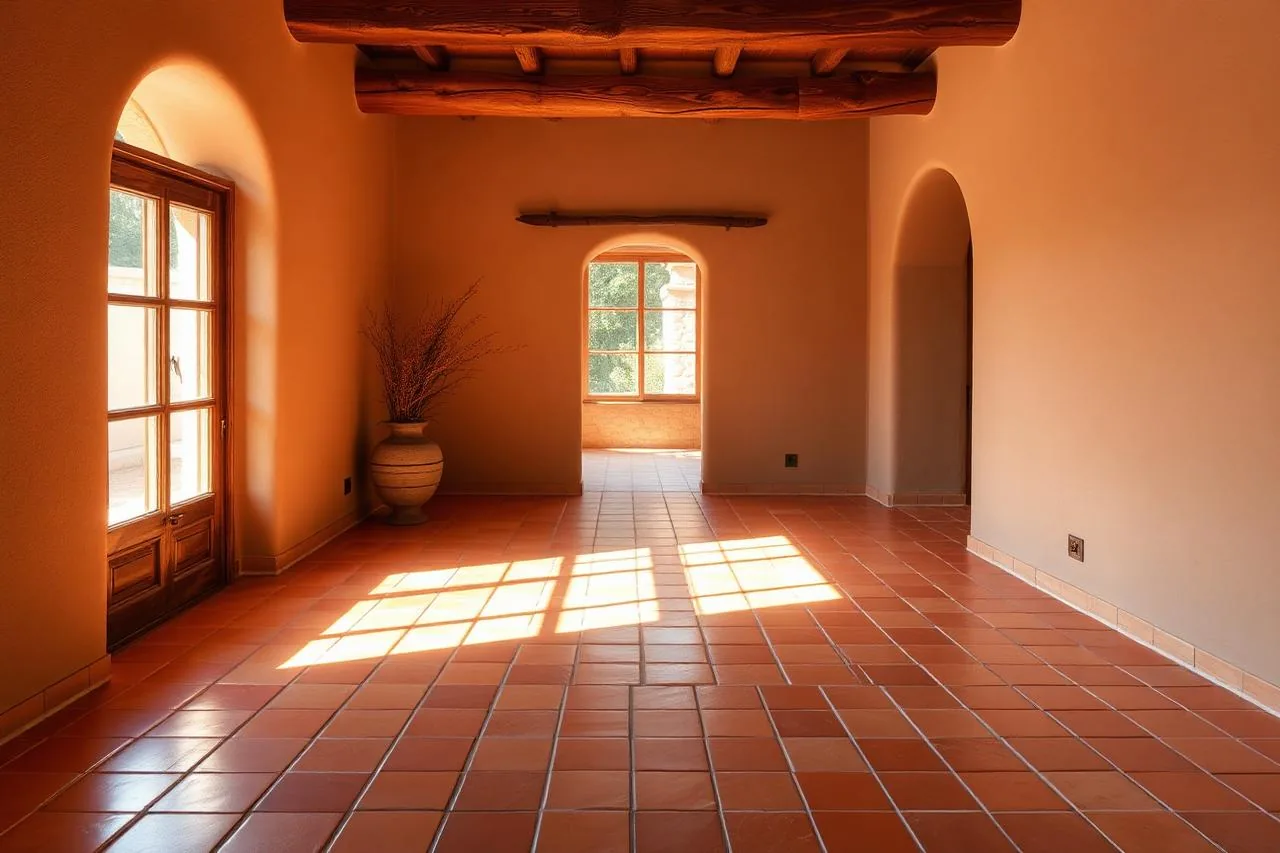
Unlike ceramic or porcelain, Saltillo is fired at low temperatures and left unglazed, making it extremely porous, the most porous material on this list. It requires sealing to function at all as flooring.
It is also one of the most commonly neglected tile types in older Phoenix area homes, where decades old sealer has worn through and was never reapplied.
Extremely Porous
Unglazed clay fired at low temperature absorbs water, oil, and grime almost immediately when bare.
Requires Sealing To Function
Sealer is not a finishing touch on Saltillo. Without it the floor is unfinished clay.
Reseal Every 2 To 4 Years
Two to four years for topical or acrylic sealers, roughly yearly for penetrating sealers.
Common In Older Valley Homes
Widespread in older Phoenix and Scottsdale homes, often with sealer that wore through years ago.
Know Which Sealer Approach You Have
On Saltillo, the finish you see is the sealer, not the tile. Identifying which product is on the floor decides the entire maintenance plan.
Glossy wet look, most common historically
Periodic stripping and reapplication as the film wears
Patchy sheen and traffic lanes wearing through first
Matte and breathable
Roughly yearly reapplication, no stripping needed
Absorption spots appearing where the sealer has thinned
Traditional look on older installations
Re waxing on a regular cycle, harder to maintain than modern sealers
Wax buildup darkening and yellowing over time
Dry, matte, chalky clay
Needs immediate attention, not a maintenance routine
Deep absorbed stains that set permanently in bare clay
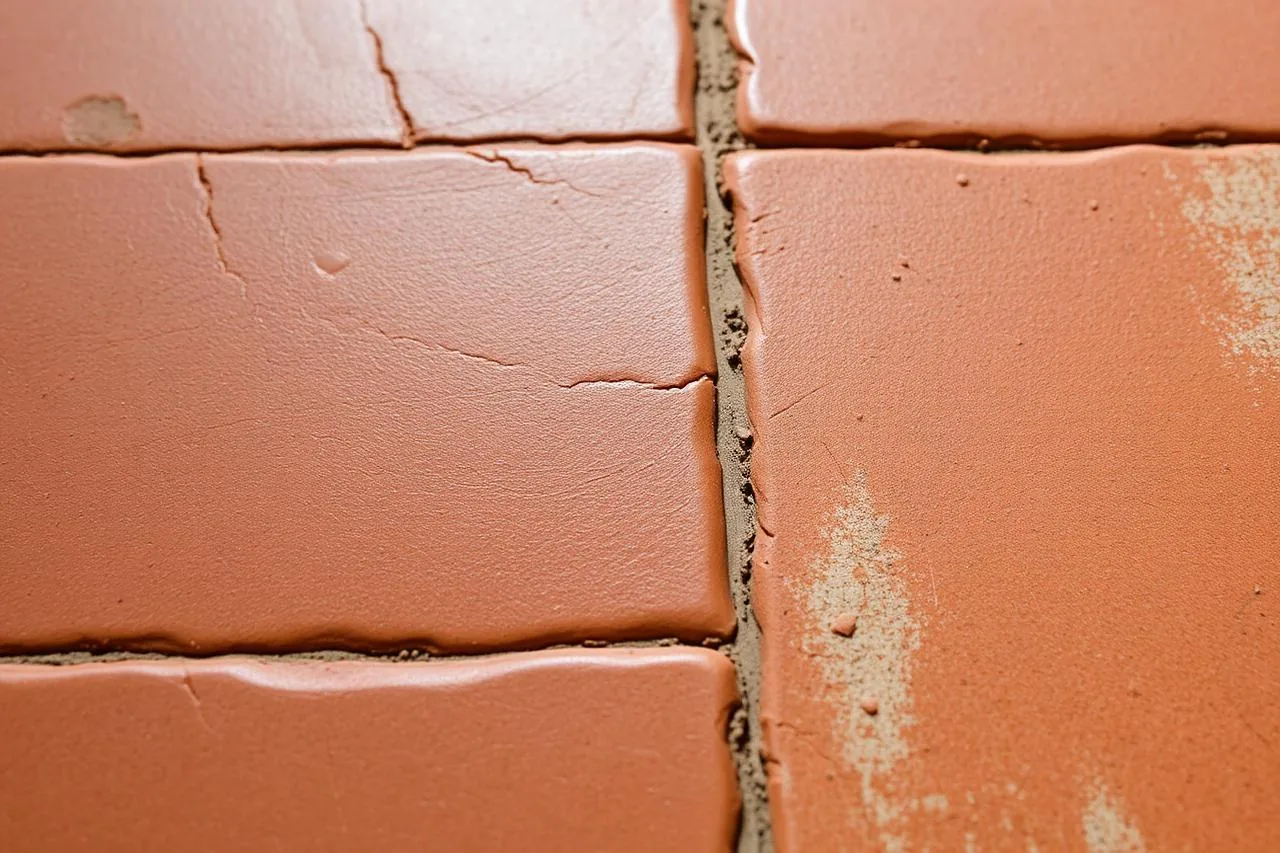
Catch It Early
Saltillo tells you loudly when the sealer is gone. These signs mean the floor is absorbing right now.
A Routine You Can Actually Keep
Keep water minimal and the reseal schedule honest. Those two habits carry a Saltillo floor for decades.
- Dry dust mop only
- Damp mop sparingly with a pH neutral cleaner, since excess water on failing sealer soaks straight into the clay
- Spot check high traffic areas and entryways for sealer wear
- Full reseal on a penetrating sealer schedule
- Every two to four years for topical or acrylic sealers
The Deep Clean Process
Five steps, in order. Every one of them is about using less water than instinct suggests.
- 01
Dry Dust Thoroughly First
Saltillo's texture holds grit that scratches the surface if it gets mopped over.
- 02
Use Minimal Water
A pH neutral cleaner with as little water as possible. Never soak the floor.
- 03
Work In Small Sections
Small sections keep cleaner from sitting and soaking into unsealed or worn areas.
- 04
Rinse With A Nearly Dry Mop
Wring the mop out hard. A wet rinse on worn sealer is how absorption starts.
- 05
Dry Fully And Inspect
Let it dry completely, then look for absorption spots that indicate sealer wear.
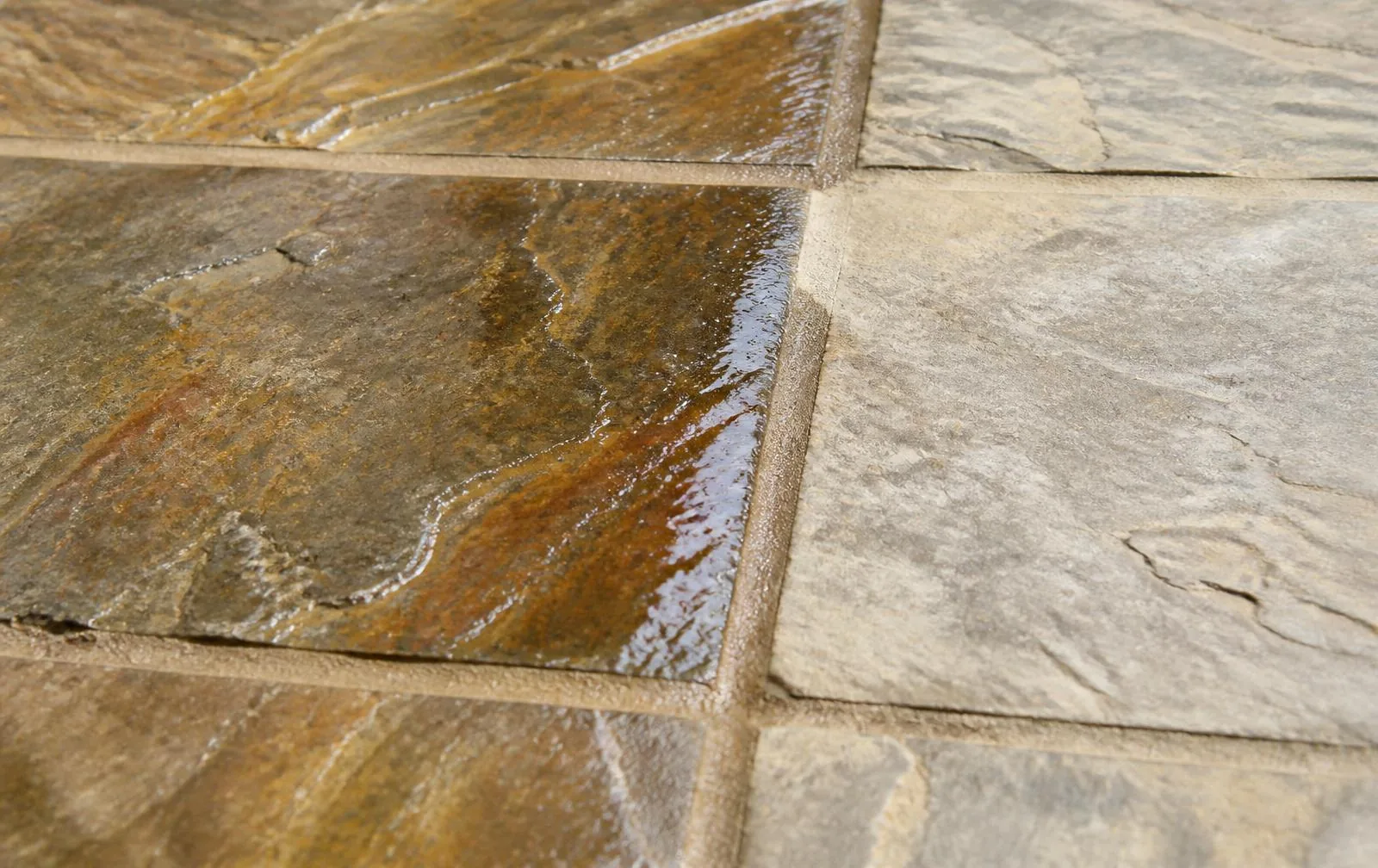
An Under Sealed Saltillo Floor Is A Functional Failure
An unsealed or under sealed Saltillo floor is not a cosmetic issue, it is a functional failure.
This is the one material on this list where the sealer is not protecting the surface, it is the only thing making the surface usable as flooring at all. Everything else in this guide follows from that.
- Reseal before the floor looks worn, not after
- Know which sealer type is on the floor before planning maintenance
- Strip failing topical sealer rather than coating over it
- Treat absorption spots as a sealing issue, not a stain issue
Stain Chart
On Saltillo, half of what looks like a stain is really a sealer report. Read it that way before reaching for a product.
Oil based stains
Poultice, often requiring multiple applications, since bare clay absorbs far more deeply than sealed tile
Water stains and dark spots
Usually a sign of sealer failure in that spot rather than a treatable stain. Flag for resealing rather than stain removal
Efflorescence
Dry brush first, then a stone safe efflorescence remover
General grime in older worn sealer
A full strip and reseal is usually more effective than spot cleaning
Do This, Never That
Do
- Reseal proactively before the floor shows chalky wear
- Use minimal water, always
- Dry dust before every wet cleaning
- Identify the existing sealer type before planning work
Don't
- Letting the floor go years past its reseal schedule
- Excess water or steam mopping
- Assuming an old shiny floor is still protected, since that sheen can be failing sealer
- Coating fresh sealer over a failing topical film
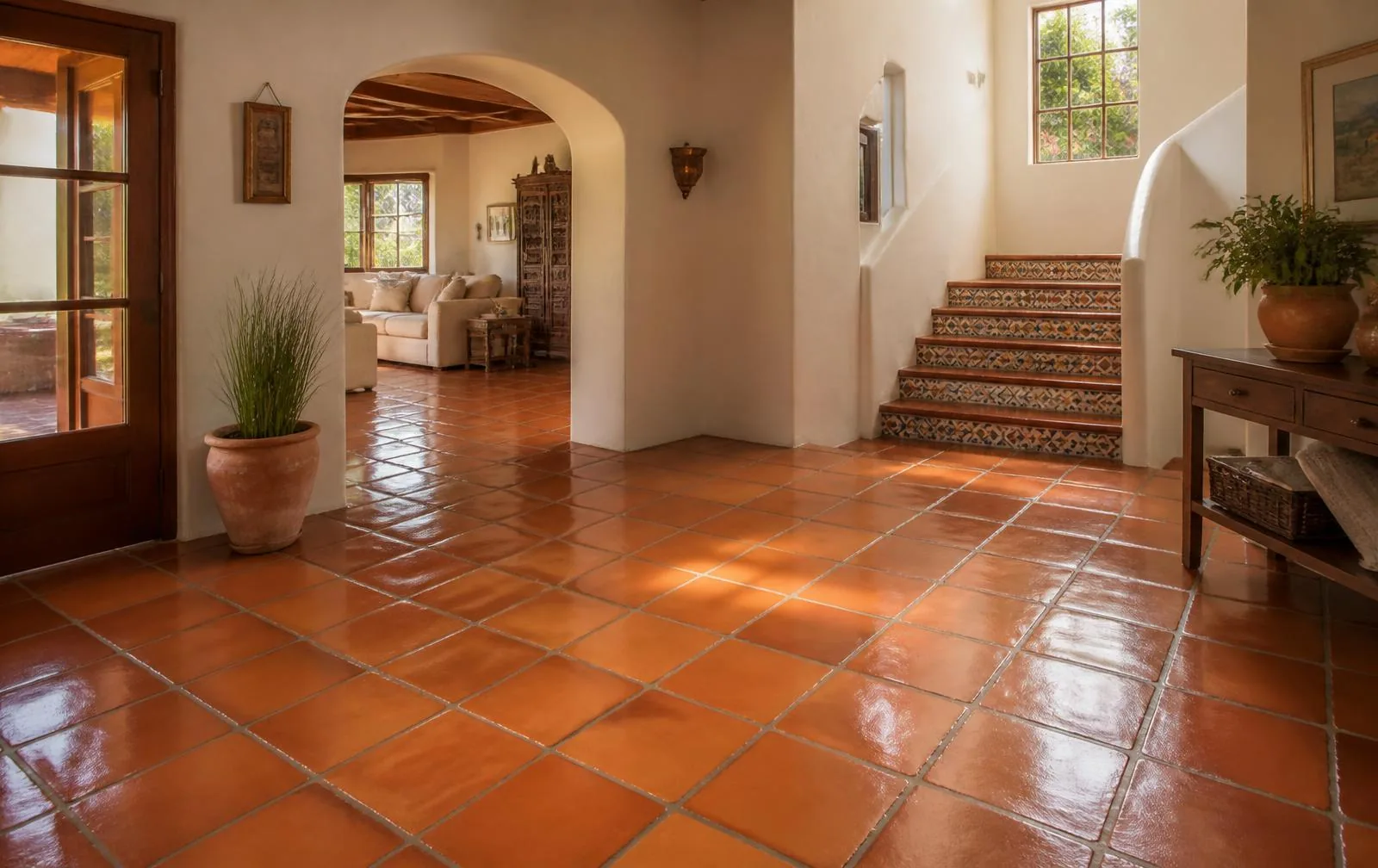
What Actually Gets Sealed
The entire surface, without exception. Saltillo is functionally unfinished flooring until it is sealed, unlike every other material in this guide.
The Entire Tile Surface
Every tile takes sealer. A single missed area absorbs immediately and shows as a dark patch.
Grout And Joints
Saltillo grout lines are wide and porous, so they seal alongside the tile in the same pass.
Edges And Entryways
Doorways and traffic lanes wear first, so they get extra attention at every reseal.
When To Call A Pro
Homeowner care handles maintenance. These four situations are restoration work, and waiting on them almost always raises the cost.
Chalky Or Dusty Surface Texture
Chalkiness means the sealer is fully gone and the clay itself is shedding.
Dark Absorbed Stains Spreading
Stains crossing multiple tiles indicate a large unsealed area, not isolated spills.
No Reseal In More Than Four Years
Past four years, assume the floor has been absorbing and start with an assessment.
Patchy, Uneven Sheen
Inconsistent sheen usually means old sealer applied unevenly, which needs stripping to correct.
Want A Read On Your Stone?
Free assessment across Scottsdale and the greater Phoenix Valley.
Saltillo Tile Questions
Related Pages
Quarry Tile Care
Dense unglazed clay tile: how it wears, and the maintenance it actually needs.
Learn moreNatural Stone Sealing Guides
When sealing actually matters, which products to use, and how often to reapply.
Learn moreTerrazzo Restoration
Polished composite floors: grinding, honing, and keeping the finish consistent.
Learn moreReady when you are
RESTORE YOUR STONE.
GET A FREE BID.
Design-builds, restoration projects, specialty projects, and remodels across the Valley · Family-owned and locally operated.
- Mon–Fri · 7am to 4pm
- Sat · Closed
- Sun · Closed